Thanks! We have received your form submission, we'll get back to you shortly!
Oops! Something went wrong while submitting the form
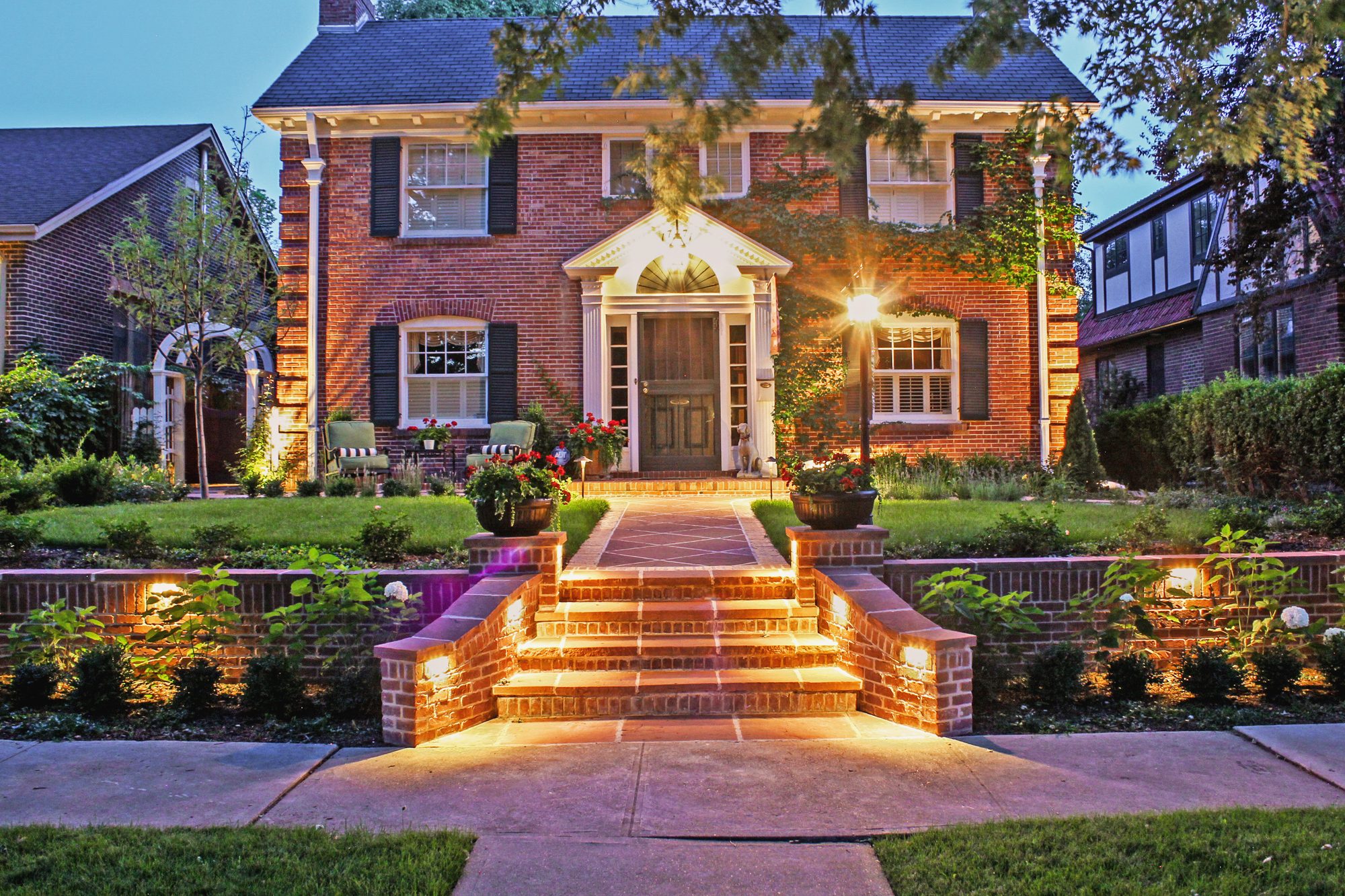
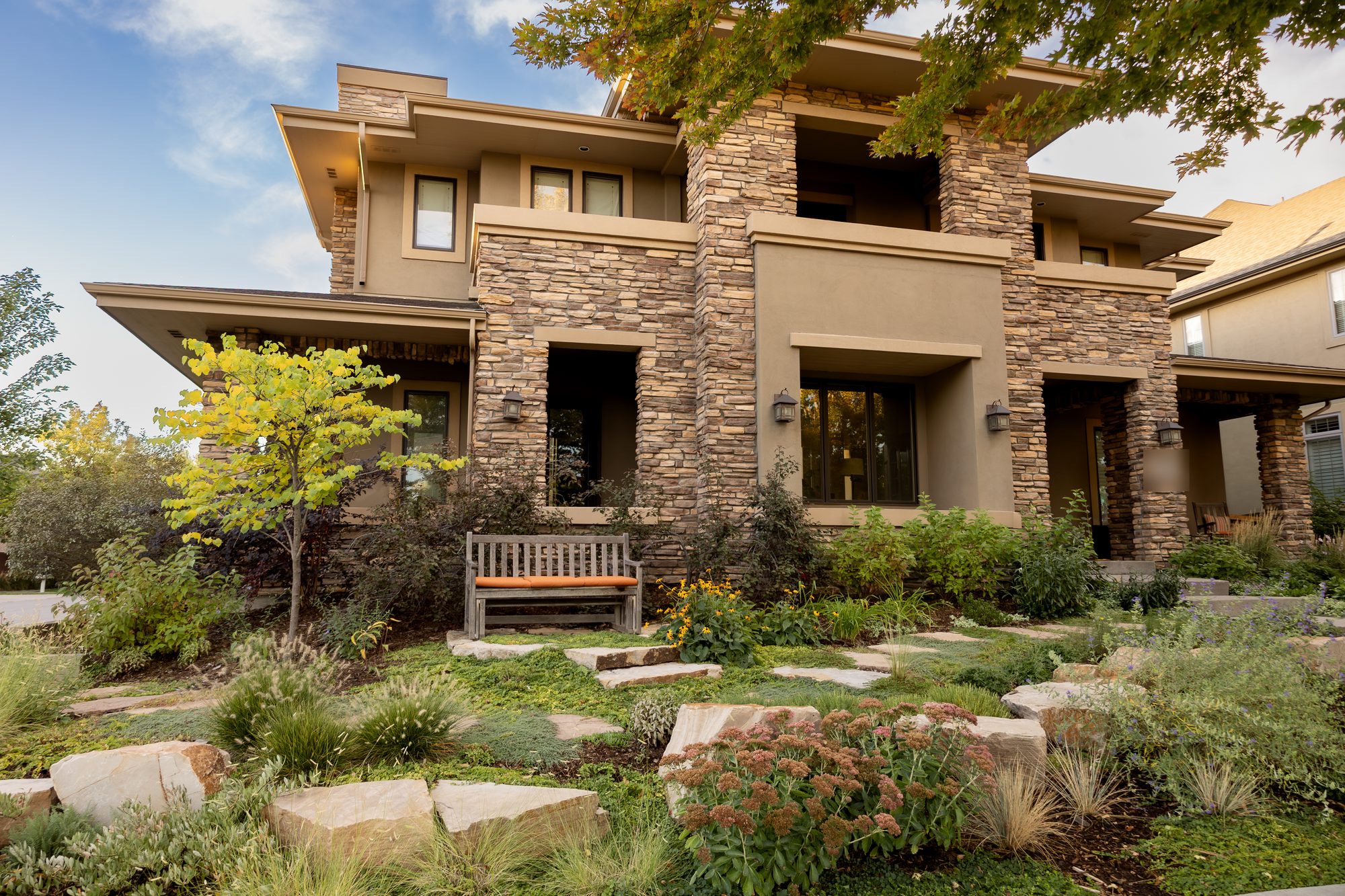
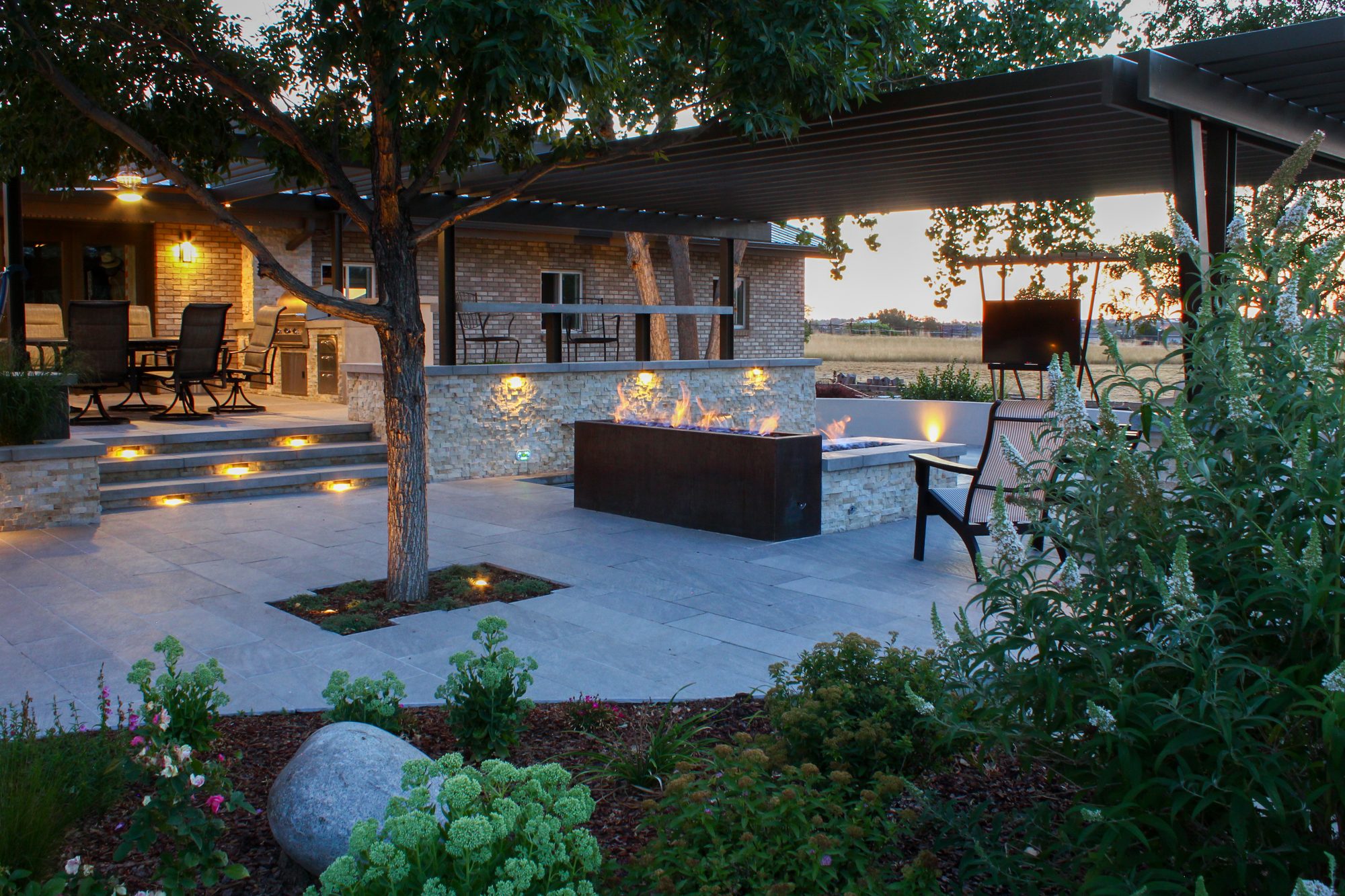
Good landscape lighting design in Denver layers four jobs: safe light on paths and steps, soft light on walls and plantings, warmer light where you gather, and shielded fixtures that keep glare out of the sky and off your neighbors. Ivy Street Design has designed Denver metro landscapes since 1992, and lighting is where a finished yard earns its evenings.
Quick Summary
Landscape lighting design is a plan for where light goes, what each fixture does, how it is powered, and how it is controlled. In a Denver yard, that means choosing fixture types, beam angles, color, wiring, and zones before installation, so every light has a job and none of them creates glare.
That plan belongs with the rest of the landscape, not after it. At Ivy Street Design, lighting is drawn alongside walls, steps, patios, and planting, because fixtures set into masonry and the wiring behind them are far easier to place while the hardscape is still on paper. Our design process includes site analysis, a 3D presentation, and construction observation. We work as design-only or design-build, so you can hand the plan to your own contractor or have us carry it through. You can see how we approach this service on our landscape lighting design page.
Layer light by purpose. Start with safety light on paths and steps, add wall and hardscape light for definition, highlight a few trees and plantings as focal points, then give gathering areas a softer, brighter layer. Each layer stays low and shielded, so the yard reads as one scene instead of scattered spots.
Here is how each layer works in practice:
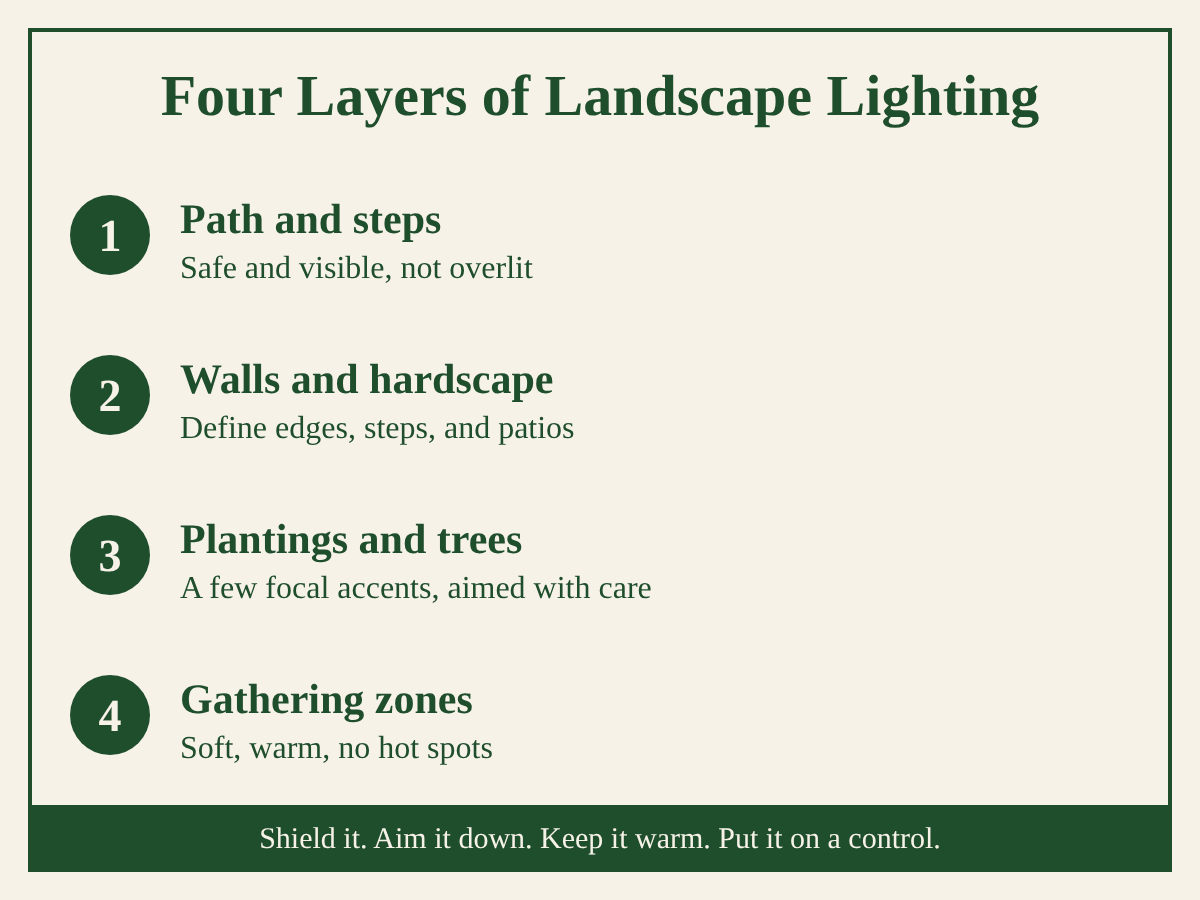
The rule that ties the layers together is restraint. A few well-aimed fixtures usually look better at night than many bright ones. If you are planning a larger outdoor entertaining space, our luxury backyard design post shows where lighting fits among the other design decisions.
Warm white is the usual choice. One manufacturer reports that its most popular landscape lights fall in the 2700K to 3000K range, a soft, golden tone. Keep each fixture only as bright as its task requires, and shield and aim it so the light falls where it is useful.
DarkSky International, the dark-sky advocacy group, frames residential lighting around a few principles. Light should be targeted, meaning shielded and aimed downward where it is useful. It should be low-level, no brighter than needed. It should be controlled, on only when needed, with timers or motion sensors. And it should be warm-colored, since warm light causes less skyglow. Its luminaire program also asks for a dimming option on approved fixtures. You can read the details in the DarkSky luminaires program packet.
Those principles are good design as much as good manners. Shielded fixtures cut glare in your own eyes, and warm color flatters brick, stone, and foliage. Local lighting rules and HOA guidelines vary by city and neighborhood, so confirm yours before you finalize fixtures.
Colorado winters bring snow cover, freeze-thaw cycles, and salted walks, so fixtures need sealed housings and corrosion-resistant metal. Look for an IP rating of at least IP65, choose brass, copper, or higher-grade stainless, and plan wiring and fixture heights before hardscape goes in.
A few details separate fixtures that last from fixtures that get replaced:
Winter is also when a Denver yard is dark early. Evening hours are long from late fall through early spring, so a lighting plan earns its keep in the months most people think of as the off-season.
Most landscape systems use a transformer to step line voltage down to 12 volts AC, the common standard that handles long wire runs well. Size it so the load stays at or below 80 percent of capacity, and plan runs to limit voltage drop, which can make lights fail or burn out at 10 percent or more.
The wiring layout matters as much as the fixtures. Aspect LED recommends a star topology, where each light gets its own run back to one junction, over daisy chaining one light to the next. It reduces voltage drop, isolates failures, and leaves only one junction to waterproof. Systems that run at full line voltage may require a licensed electrician. Solar lights need no wiring, but they are often dimmer and perform poorly in low-sun spots.
Design lighting at the same time as the hardscape and planting plan, ideally in winter, so conduit, wall fixtures, and transformer locations are set before construction begins. Waiting until the end usually means surface-mounting fixtures and running exposed wire, which limits what the design can do.
That timing fits the Colorado calendar. Design now, and your lighting plan is ready when the ground thaws. Our post on when to start a landscape project in Colorado explains why winter is design season.
Warm white is the common answer. Aspect LED reports that its most popular landscape lights fall between 2700K and 3000K. Warmer light also causes less skyglow, according to DarkSky International.
There is no fixed number. A good plan starts with safety light on paths and steps, then adds light for hardscape edges, a few focal plantings, and gathering areas. Count follows purpose, and fewer well-aimed fixtures usually beat many bright ones.
For most yards, yes. LEDs cost more upfront but last far longer and use much less electricity. Halogen bulbs are cheaper to buy, but they last roughly 2,000 to 5,000 hours, so they need more maintenance.
A system built with sealed, corrosion-resistant fixtures and planned wiring is designed for outdoor use. Timers and controls keep it on only when needed, which matters in the long dark evenings of a Colorado winter.
Both are available. Ivy Street Design offers design-only or design-build, so you can take the lighting plan to your own contractor or have us build it.
Call Ivy Street Design at (303) 320-0362 or visit ivystreetdesign.com to schedule a consultation.