

Thanks! We have received your form submission, we'll get back to you shortly!
Oops! Something went wrong while submitting the form
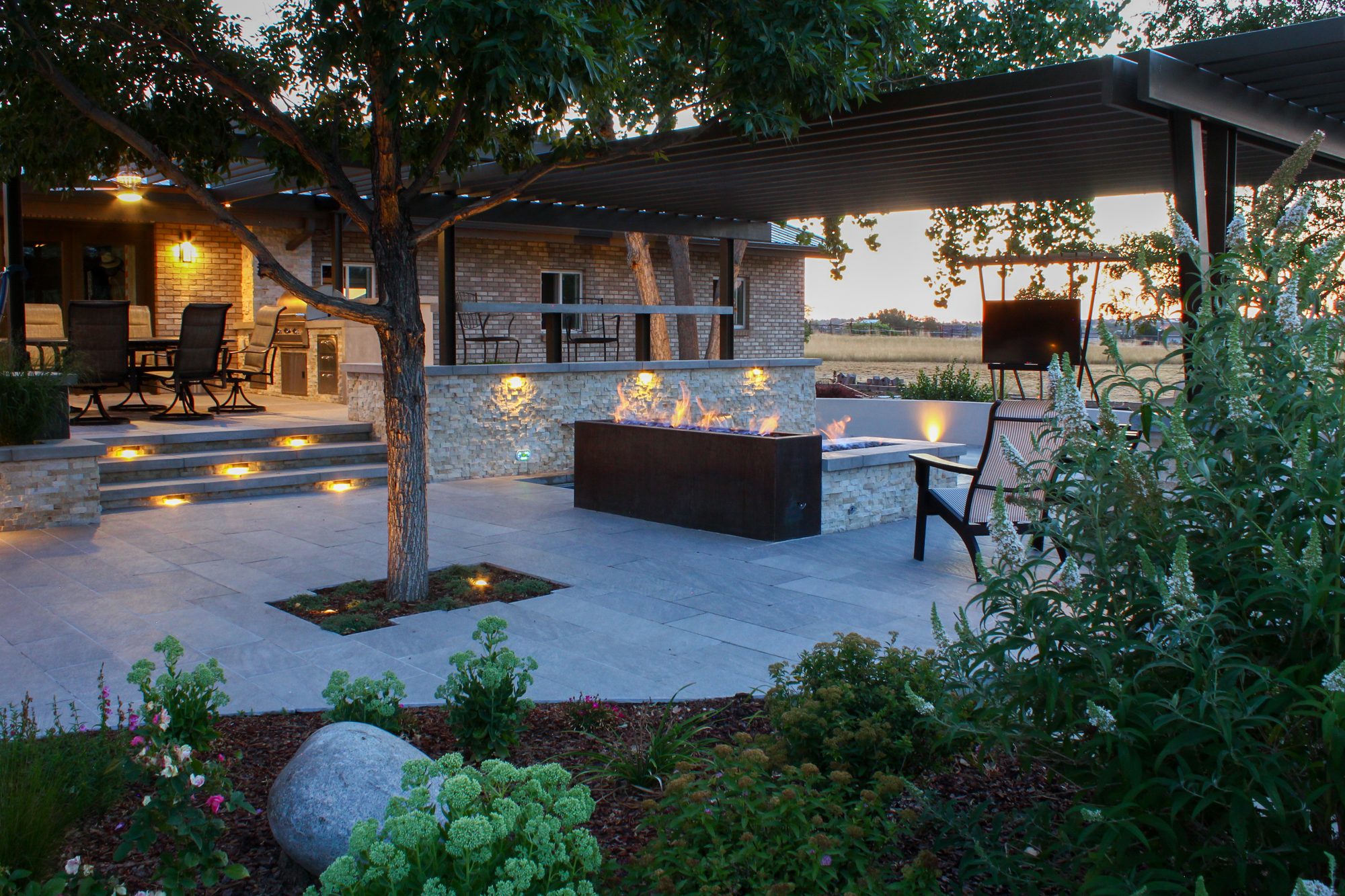
Luxury backyard design in Denver starts with a complete master plan drawn before anyone moves dirt. Ivy Street Design has designed Denver metro landscapes since 1992, and the yards that feel high-end share four traits: one plan for the whole property, materials chosen for Colorado weather, restrained layered lighting, and a build order that avoids rework.
Quick Summary
A luxury backyard is designed as one complete system. The master plan fixes the grading, drainage, materials, lighting, and build order for the whole property before construction starts. A standard project adds features one at a time. A luxury project decides first how every feature relates to the others.
That difference shows up on the ground. Steps, walls, patios, fire features, and planting beds line up because they were drawn together. Sight lines from the kitchen to the fire feature to the view are planned, not discovered after the fact.
At Ivy Street Design, the design process begins with site analysis. The team studies slope, sun, access, existing trees, and how the family actually uses the yard. A 3D presentation then lets you see the plan before you commit to it. During construction, observation keeps the built result true to the drawings. You can hire Ivy Street for design only, or for design and build.
A master plan shows the entire design before installation begins. That lets the work happen in the most efficient order and keeps you from paying twice for the same area. It also gives every later phase a fixed target, so the finished yard looks planned rather than assembled.
A landscape professionals trade blog interviewed several designers on phased projects. One said that "planning for everything at the beginning will allow for a more cohesive design, as well as implementation process." Another warned that clients "shouldn't pay for something twice because of poor planning."
Denver properties raise the stakes. Slopes, grade changes, and drainage paths shape where anything can go. A master plan resolves those constraints once, on paper, instead of one change order at a time. For sloped sites, see our post on retaining wall design in Denver.
Infrastructure goes first: drainage, grade changes, retaining walls, and access routes. Trees also belong in the first phase. Patios, irrigation, outdoor kitchens, and fountains come next, and lawn and garden beds finish the work. This order protects completed work from damage by later phases.
The Exterior Worlds guide to landscape phasing recommends starting with infrastructure and planting trees early, because they grow into the space while the rest is built. It also gives a fair warning: the overall cost usually totals more under a phased approach, since some areas may need to be reworked. A strong master plan keeps that rework small.

The trade blog adds two practical points. Some items are easier to add later with little disruption, including lighting, grill islands, pergolas, and small water features. But one designer advises planning early for drainage, lighting, irrigation, gas, and water, and laying low-cost sleeves that "prevent costly demolition." In practice, that means running conduit and gas lines before the patio goes in, even if the fixtures arrive years later.
Choose materials by how they handle Colorado weather, not just how they look in a photo. Denver yards go through freeze-thaw cycles, strong sun, and winter ice. Natural stone and well-installed pavers suit that climate when the base is built correctly. A tight palette also reads as more deliberate and refined.
Use this checklist when you compare options with your designer:
Limit the palette to a few materials repeated across the yard. Repetition is what makes a large property feel unified. Our patio design and fire feature design services follow that approach.
Good lighting is useful, targeted, low level, controlled, and warm in color. Light the steps, paths, and gathering areas people actually use, aim fixtures so the light lands only where needed, and keep brightness modest. The goal is a yard that glows at dusk, not one that looks like a parking lot.
Those five ideas come from the DarkSky lighting principles: use light only if it is needed, direct it only where it is needed, keep it no brighter than necessary, use it only when needed, and use warmer-color lights where possible.
In a layered scheme, low path and step lights guide movement, accent lights pick out a wall or a specimen tree, and soft light over the dining and fire areas supports entertaining. Timers and controls let you dial the yard down late at night. Because wiring is easiest to run before paving, lighting belongs in the master plan even if fixtures are added in a later phase. Learn more about our landscape lighting design work.
Decide how you want to use the yard, what the property demands, and how you want the work delivered. Clear answers to a few questions make the first consultation far more productive and make the resulting master plan more accurate.
Cost depends on scope, site conditions, materials, access, permits, and the level of design detail. A sloped lot with walls and drainage work costs differently than a flat lot with a patio. Ivy Street Design can scope the work after a site analysis and consultation.
A master plan is still worth having. Even a single feature affects grading, drainage, utilities, and sight lines. Planning the whole yard once means the fire pit, patio, or kitchen you add today will fit whatever you build later.
Yes. Phasing spreads the spending over time and is common on large properties. Build infrastructure and trees first, run utility sleeves early, and finish with lawn and beds. Expect some added cost from repeat mobilization, which a strong master plan helps limit.
Design work does not need warm ground, so winter is a good time to plan. You can finalize the master plan and be ready to build when conditions allow. Our post on when to start a landscape project in Colorado explains the timing.
Design-only gives you a complete set of plans that you can take to a contractor for bids. Design-build means one firm designs the project and builds it. Ivy Street Design offers both, depending on how you want to manage the project.
Call Ivy Street Design at (303) 320-0362 or visit ivystreetdesign.com to schedule a consultation.