Thanks! We have received your form submission, we'll get back to you shortly!
Oops! Something went wrong while submitting the form
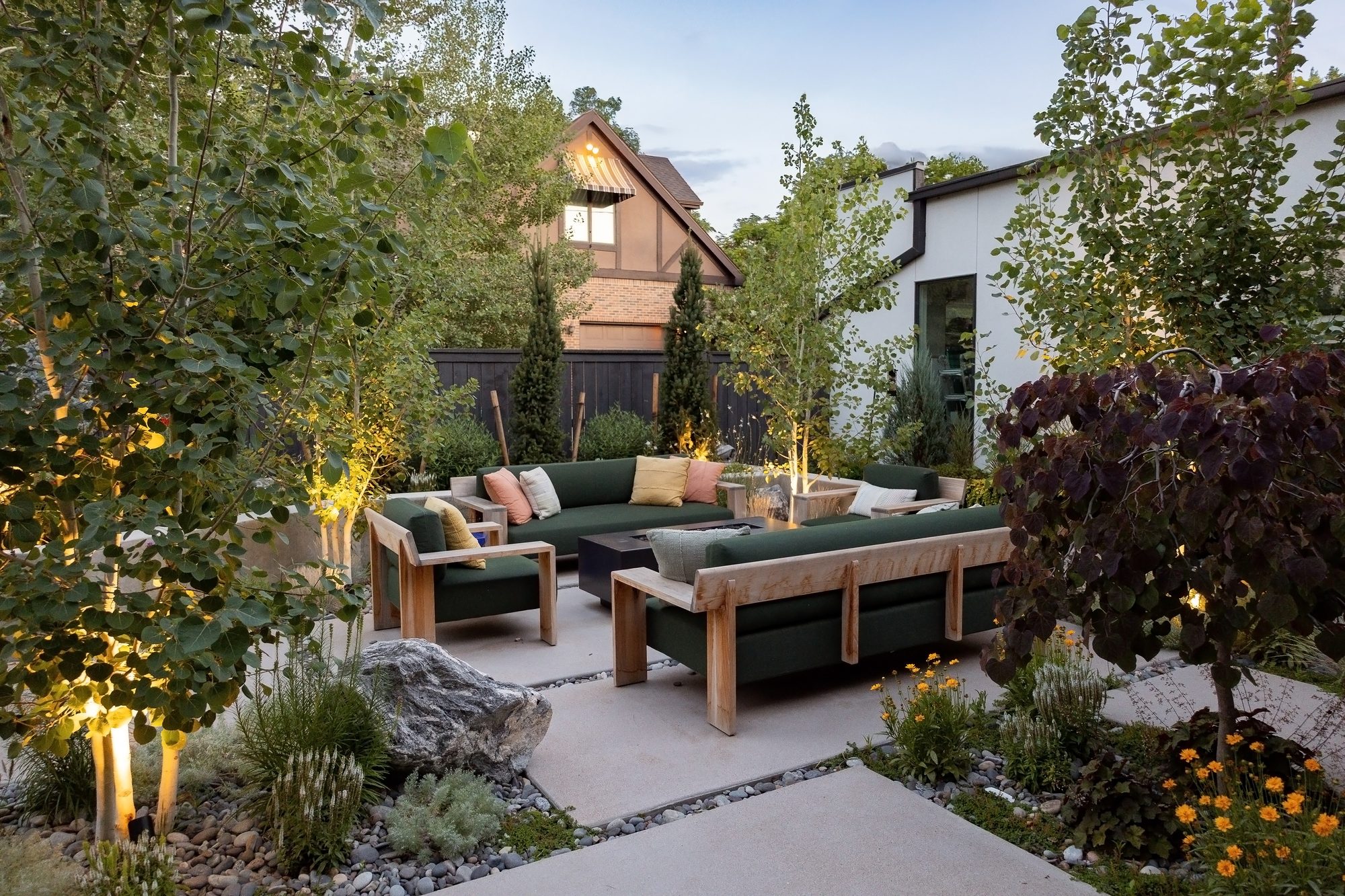
For a Colorado patio, the best material is the one that matches how you will use the space and how you will treat it in winter. Bluestone and flagstone handle freeze-thaw well but hold heat. Pavers flex with the ground and are easy to repair. Ivy Street Design helps Denver homeowners weigh all three before a shovel hits the ground.
Quick Summary
Patio materials in Colorado take a beating that surprises many homeowners. We get sharp temperature swings, strong sun, and winters that freeze and thaw the ground again and again. Since 1992, Ivy Street Design has designed outdoor spaces across the Denver metro, and the material conversation always starts with one question: what will this surface look like after ten winters?
Water gets into any porous surface or joint, freezes, expands, and then melts. Repeat that through a winter and small gaps become cracks, loose joints, or flaking faces. Materials that hold less water and bases that drain well hold up better. Concrete is the usual casualty, since it can crack over time when the ground moves beneath it.
That is why the surface alone never tells the whole story. A patio with a poorly drained base can fail in any material. A patio with a well-built base can make a modest material last far longer. When we design a patio, we look at where water will go before we look at color or pattern.
One practical point on sun: Colorado is a high-sun state, and dark or dense stone gets hot. That matters for bare feet, pets, and a south-facing seating area, so it belongs in the same conversation as freeze-thaw.
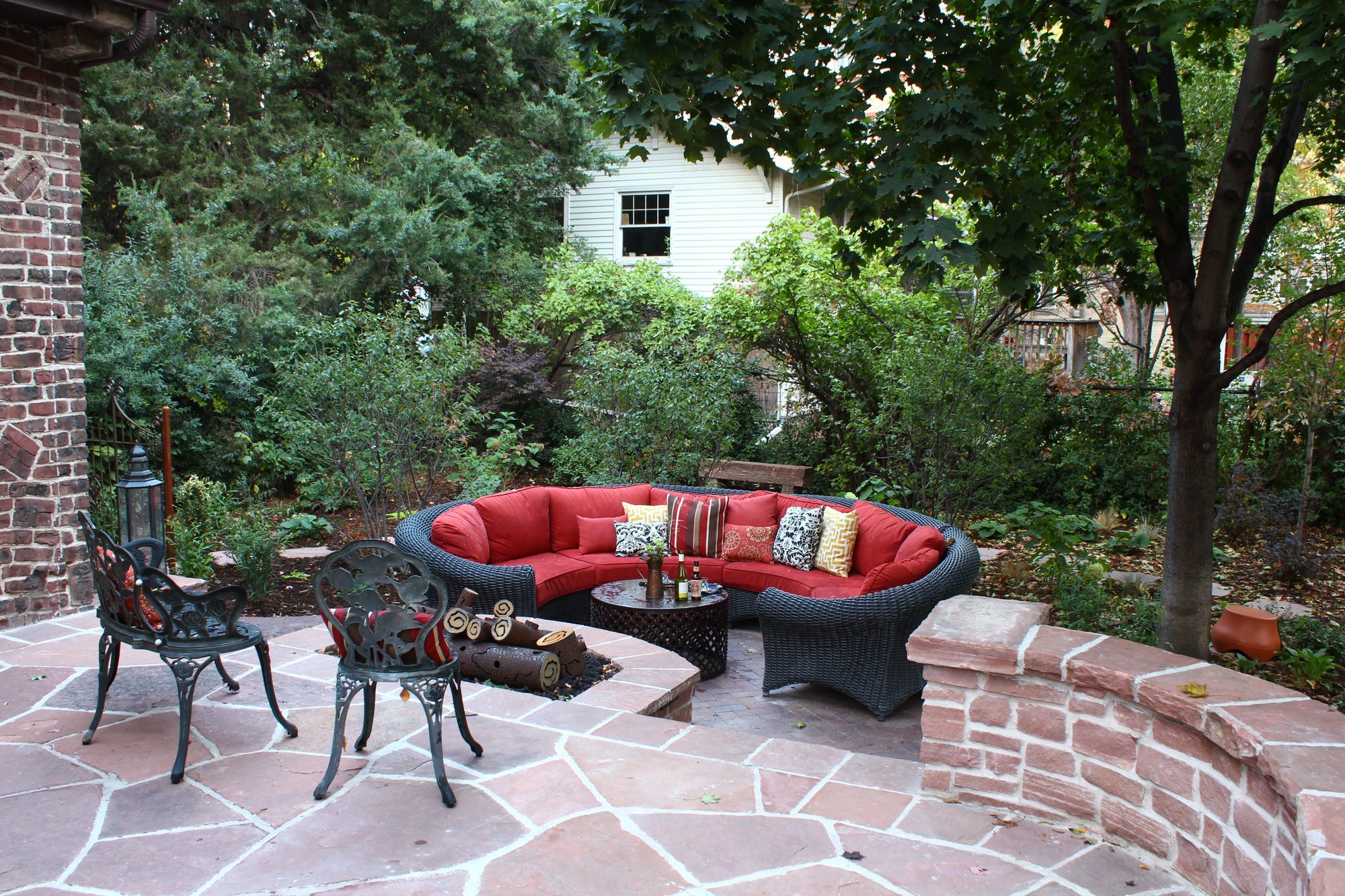
Bluestone and flagstone are natural stone that handles freeze-thaw well but holds heat. Pavers are manufactured units laid over a compacted base that can shift slightly without cracking. Each fits a different style and budget. Here is how they line up on the questions that matter most in Denver.
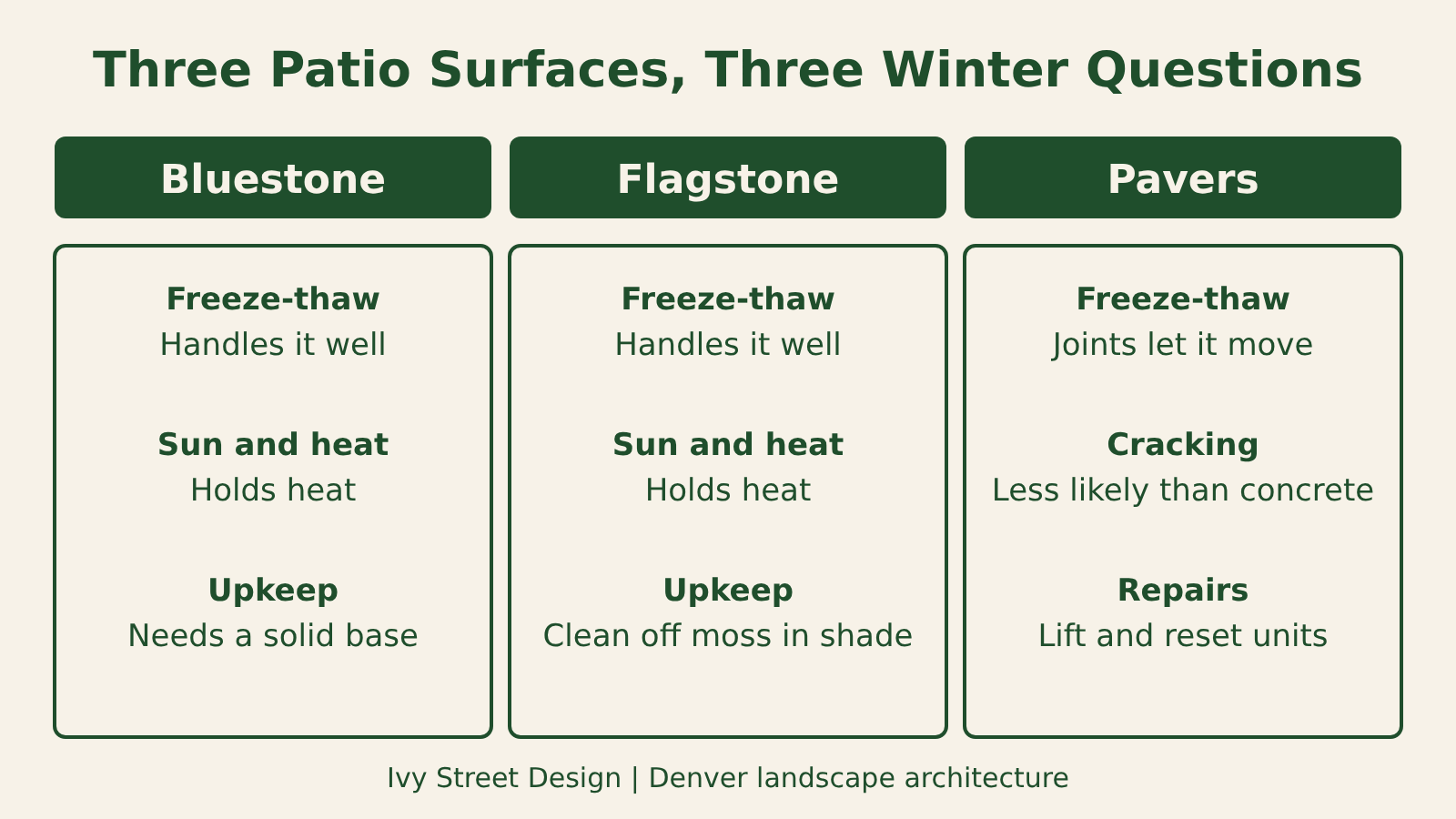
No single material wins every case. Natural stone and pavers both perform well in Colorado winters when the base is built right. Choose stone for a timeless look and strong performance in freezing weather. Choose pavers when you want easy repairs and a wide range of patterns. Your site and your habits should break the tie.
Consider three things before you pick:
If your yard has a grade change, the patio often connects to steps or walls. Our retaining wall planning guide covers how those pieces fit together.
Shovel first. Utah State University Extension calls shoveling the most eco-friendly way to keep walkways safe and recommends using chemical deicers sparingly. Rock salt can pit surfaces, and calcium and magnesium chloride are described as highly corrosive to concrete. Less deicer means less damage to any patio material.
Plan this into the design. A patio that gets sun in the morning melts on its own. A patio tucked into a shaded corner holds ice for days. If you know a spot stays icy, say so early. We can adjust the layout, add steps with a better grade, or shift the main seating area to sunnier ground.
Sealing is a separate question. Sealing is often recommended for porous surfaces in cold climates, and it is usually done before winter, in the temperature range the product label allows. Ask your installer which product they recommend for your material and how often to repeat it.
The base is the compacted layer of aggregate under the surface. It gives the patio a stable, draining foundation. A well-built base keeps water from pooling under the surface and freezing there. It is the least visible part of the project and often the most important to how long the patio lasts.
Ask any contractor you interview how they prepare the base, how deep they dig, and where the water goes. A good answer is specific to your lot. A vague answer is a warning sign. This is also why design and construction should talk to each other early. Ivy Street Design offers design-only or design-build, and our process includes site analysis, a 3D presentation, and construction observation, so the details on paper are checked in the field.
Match the material to the house and the way you live. Natural stone suits yards with planting, boulders, and informal paths. Pavers suit crisp, geometric layouts and spaces that may need future changes. Poured concrete suits clean modern lines when joints are planned well. Mixed materials often work best.
Yes. Bluestone is a dense natural stone that handles freeze-thaw cycles well. It does hold heat in direct sun, so shade or a lighter finish helps on a south or west exposure. A solid base matters as much as the stone.
Pavers are less likely to crack than poured concrete because their interlocking joints let the surface move with the ground. Concrete can crack over time in freeze-thaw conditions. Concrete often costs less up front, so budget and appearance both matter.
It is best to avoid it. Rock salt can pit and damage surfaces, and other chloride deicers can be corrosive to concrete. Shovel first, and use deicers sparingly if you must.
Sealing is commonly recommended for porous materials in cold climates and is usually done before winter. The right product depends on the material, so follow your installer's advice and the product label.
Yes. Layout, drainage, sun, and how you use the space should come first. The material then follows from those decisions.
Ready to choose the right surface for your yard? Call Ivy Street Design at (303) 320-0362 or visit ivystreetdesign.com to schedule a consultation. You can also see how we approach patio design in Denver.