Thanks! We have received your form submission, we'll get back to you shortly!
Oops! Something went wrong while submitting the form
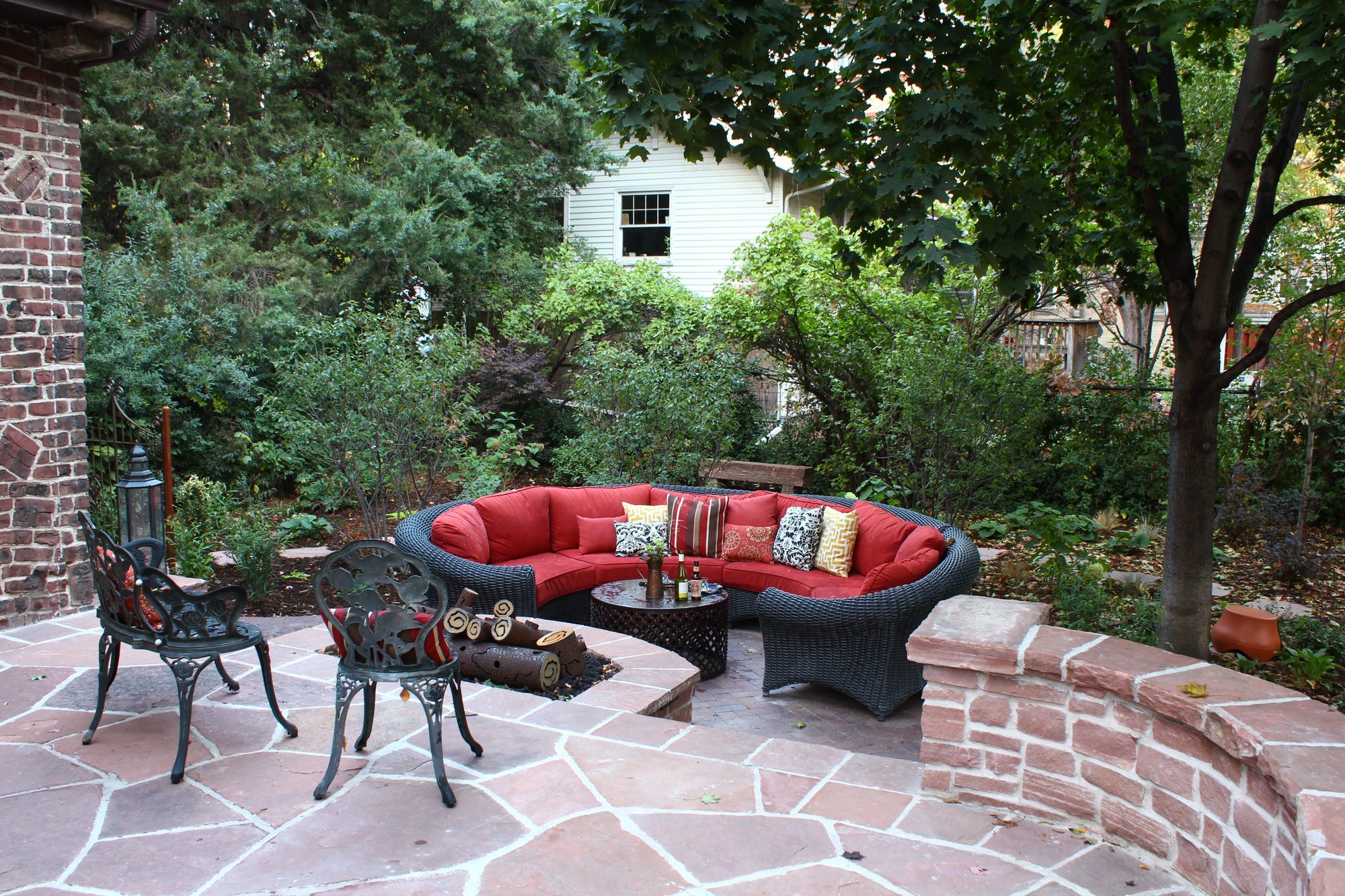
The best fire pit for most Denver yards is a gas-fueled one, because Denver restricts wood-burning fire pits and gas turns on with a switch. Ivy Street Design, a Denver landscape architecture firm designing metro landscapes since 1992, plans fuel, placement, seating, and wind together so the fire pit actually gets used from spring through winter.
Quick Summary
For most Denver homeowners, a gas-fueled fire pit or fire table is the practical choice. It starts instantly, produces no ash or smoke, and fits Denver's rules for patios. Wood suits a few properties and owners, but it brings permits, restrictions, and cleanup that most people stop tolerating after a season.
Ivy Street Design designs fire features as part of the whole outdoor space, not as a product dropped on a patio. The fire feature design service covers custom fire pits and bowls, linear fire tables, and architectural fire walls. The right form depends on how you entertain, how many people you seat, and how the pit relates to the house and the views.
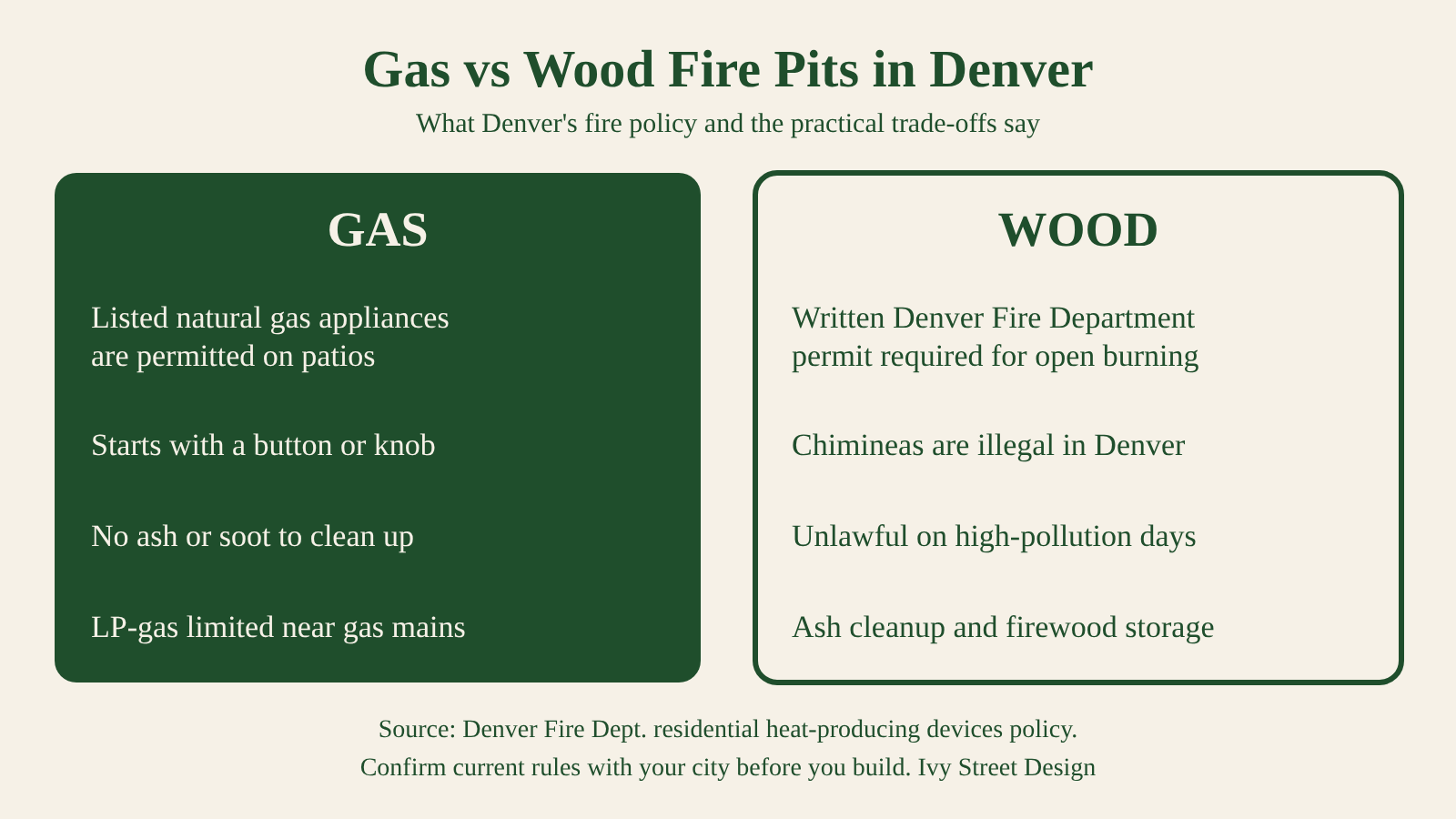
Usually not without a permit. According to Denver's residential heat-producing devices policy, open burning in a solid-fuel fire pit is unlawful without a written permit from the Denver Fire Department. Chimineas are illegal in the city, and operating a solid-fuel device on a high-pollution day is unlawful unless the device is approved as the policy specifies.
The same policy treats gas differently. Listed natural gas appliances are permitted on patios when installed under the International Fuel Gas Code. It also says LP-gas is prohibited where a natural gas source is within 300 feet of the nearest property line, so propane is not always an option in a built-up neighborhood.
This policy applies to the City and County of Denver. Other metro cities and HOAs set their own rules, and codes get updated. Confirm the current requirements with your city's fire department before you finalize a design. Part of our job is to catch this early, so the design you approve is one you can build.
Gas is easier and cleaner. Wood is more atmospheric and takes more work. Neither is wrong, but in Denver the rules push the balance toward gas. Here is how the two stack up on the points homeowners ask about most.
Seating should sit close enough that people can talk across the fire and far enough that the heat feels good, not harsh. The right distance depends on the fire's size, the fuel, and the furniture. We settle it by laying out chairs and walkways in the plan, not by guessing from a catalog number.
People need to walk behind seats and reach the house without stepping through the fire's heat. A pit crowded into a corner traps everyone in one spot. Give guests a clear path in and out.
A low, wide fire pit works with lounge seating you can sink into. A taller fire table suits dining-height chairs and drinks. Built-in stone benches or a curved sofa around a sunken pit make a tighter, more intimate circle. Each changes how far back people sit and how long they stay.
The best spot balances four things: distance from the house and overhead branches, protection from prevailing wind, a comfortable view, and an easy walk from the kitchen or back door. A pit that checks all four gets used. One that misses any of them usually sits cold.
Winter is when a fire pit earns its keep in Colorado. Cold nights often follow mild, sunny days, and a warm gathering spot extends the season. Gas helps here because you can light it on a cold evening in seconds, without splitting wood or waiting for coals.
Design choices make winter use more realistic. Put the pit close to the house so the walk is short and easy to keep clear of snow. Choose surfaces that handle freeze and thaw. Add lighting for paths and steps, because dark, icy walks end evenings early. Our guide to layered landscape lighting in Denver covers how to light the route to the fire. And keep the fire in proportion: a smaller, well-placed pit used often beats a showpiece that feels exposed on a windy night.
A fire pit looks intentional when its materials echo the house and patio. Natural stone, concrete, and metal finishes all work. The pit's wall height, cap, and surrounding paving should feel like one design. When the pit looks like an accessory, it usually was added after the patio was finished.
This is why we plan the fire feature while designing the whole yard. When the fire pit, patio, steps, planting, and lighting are drawn together, the transitions line up. Our post on luxury backyard design in Denver shows how master planning, materials, lighting, and phasing work together.
We offer design-only or design-build services. The design process includes site analysis, a 3D presentation so you can see scale and placement before anything is built, and construction observation. Fire features also involve gas lines and city requirements, so we coordinate those early, not after the patio is poured.
If you are weighing the two service models, our post on design-build versus design-only landscaping explains who is accountable for what.
Denver's residential heat-producing devices policy says listed natural gas appliances are permitted on patios when installed under the International Fuel Gas Code. LP-gas has an extra limit where a natural gas source is within 300 feet of the nearest property line. Confirm current rules with the city before building.
The city's policy says open burning in a solid-fuel fire pit is unlawful without a written permit from the Denver Fire Department. Chimineas are illegal in Denver. Because requirements change, call the fire department before you plan a wood-burning pit.
Both give warmth, but gas is easier on a cold weeknight because it lights instantly and needs no cleanup. Wood gives stronger radiant heat and a traditional feel. In Denver, restrictions on solid-fuel devices make gas the more reliable winter option.
Often yes, but it depends on clearances, the gas line route, and the base. A pit added late can feel like an afterthought. A site visit and a layout drawing show whether it can sit comfortably in the existing patio or whether a small patio change would work better.
If the pit is part of a larger outdoor living space, yes. Placement, grade, wind, gas, lighting, and seating all interact. A single plan helps them work together and helps you avoid expensive changes during construction.
Call Ivy Street Design at (303) 320-0362 or visit ivystreetdesign.com to schedule a consultation.