

Thanks! We have received your form submission, we'll get back to you shortly!
Oops! Something went wrong while submitting the form
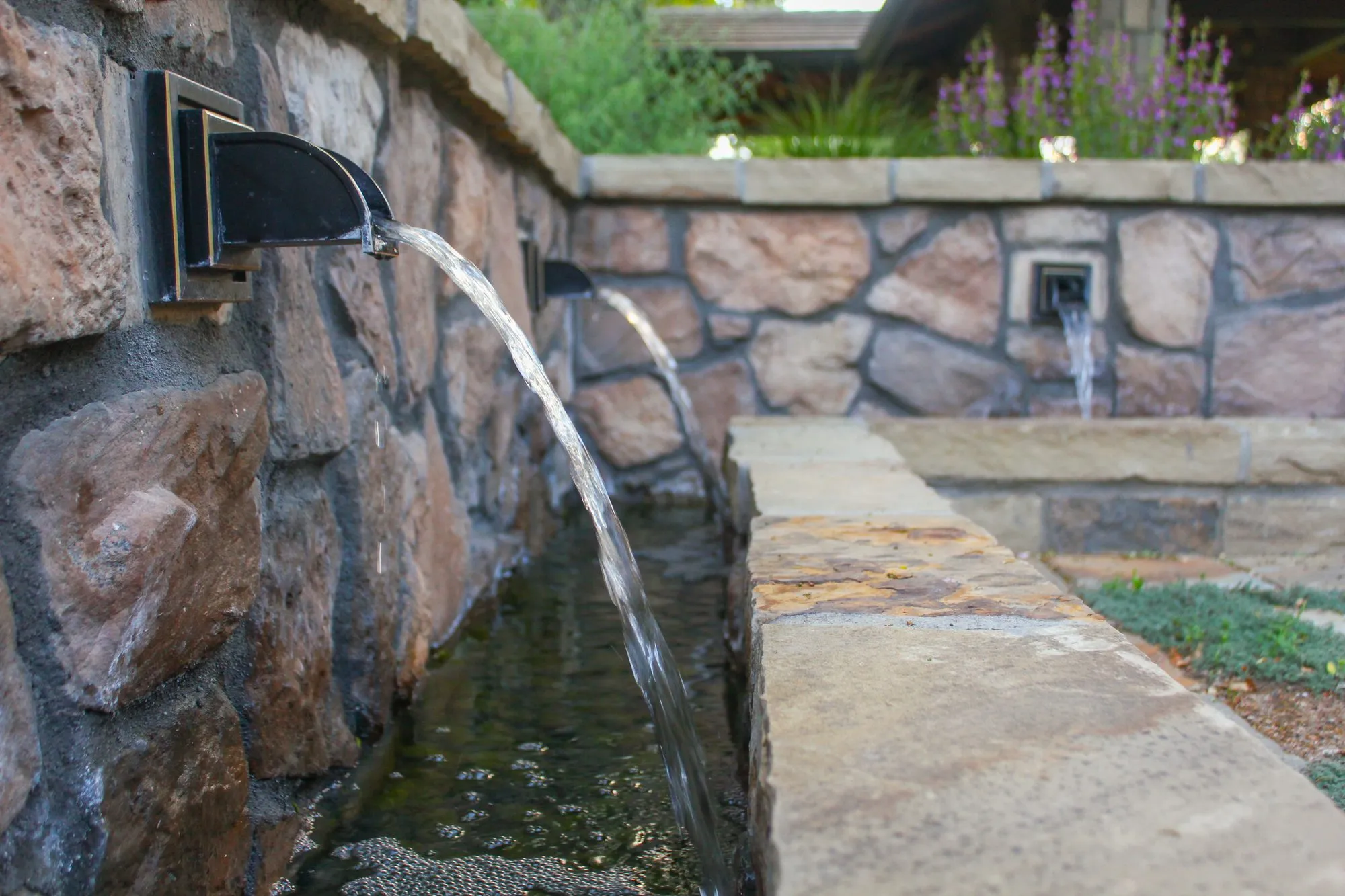
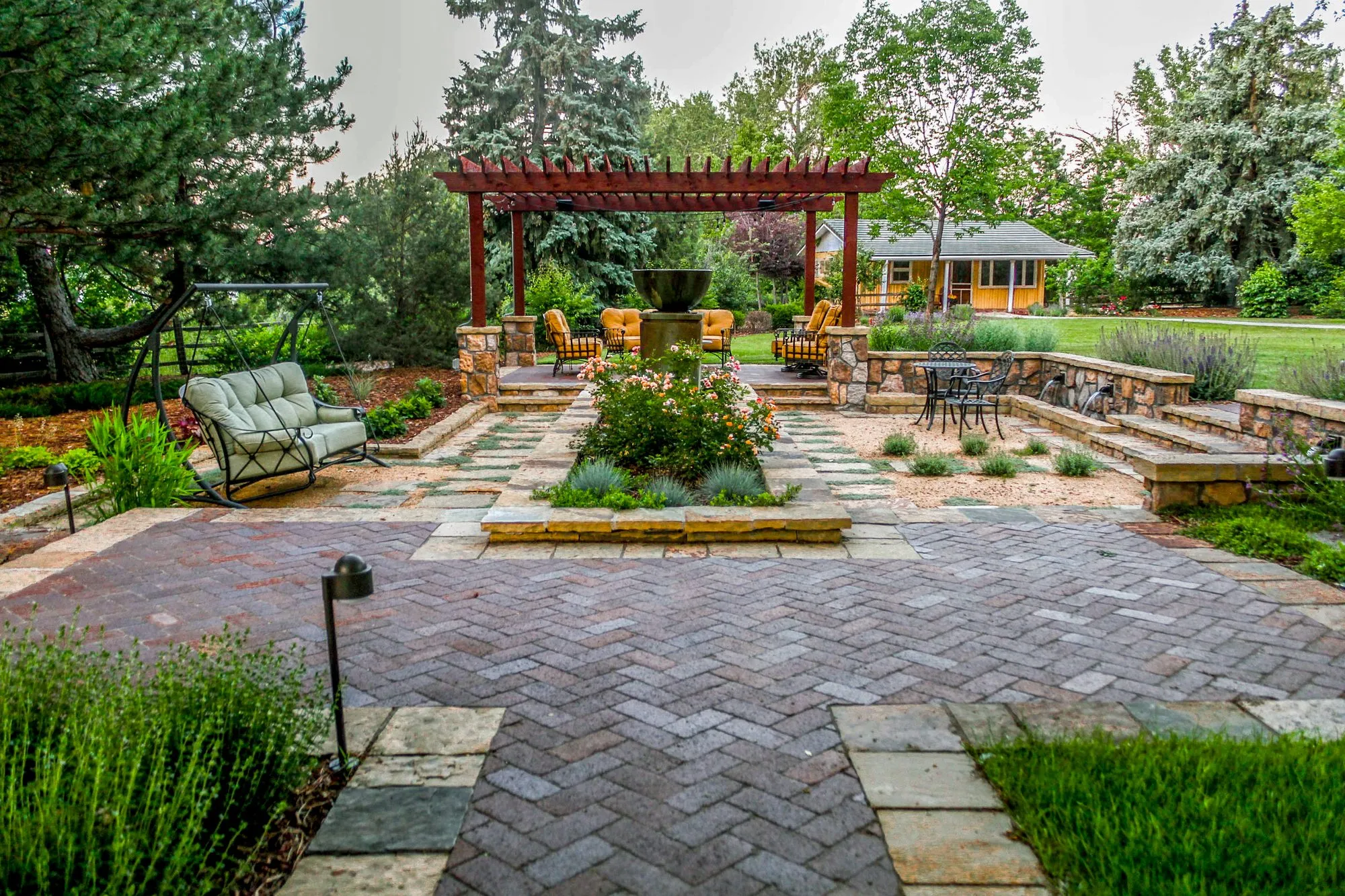
A water feature in Denver costs whatever its size, pump, stone, site, and extras add up to, and no honest number exists until someone looks at your yard. Ivy Street Design has designed Denver metro landscapes since 1992, and this guide explains what moves the price so you can compare quotes with confidence.
Quick Summary
A water feature costs the sum of its size, pump, stone, site work, extras, and fees. There is no single Denver price, because a small pondless basin and a tiered stone cascade differ in design time, excavation, and materials. Professionals price per project, so the useful question is which choices move your total.
We left dollar figures out of this guide on purpose. Prices change with materials, labor, and the details of each yard. Any number printed without a site visit is a guess, and a guess is a poor basis for a budget.
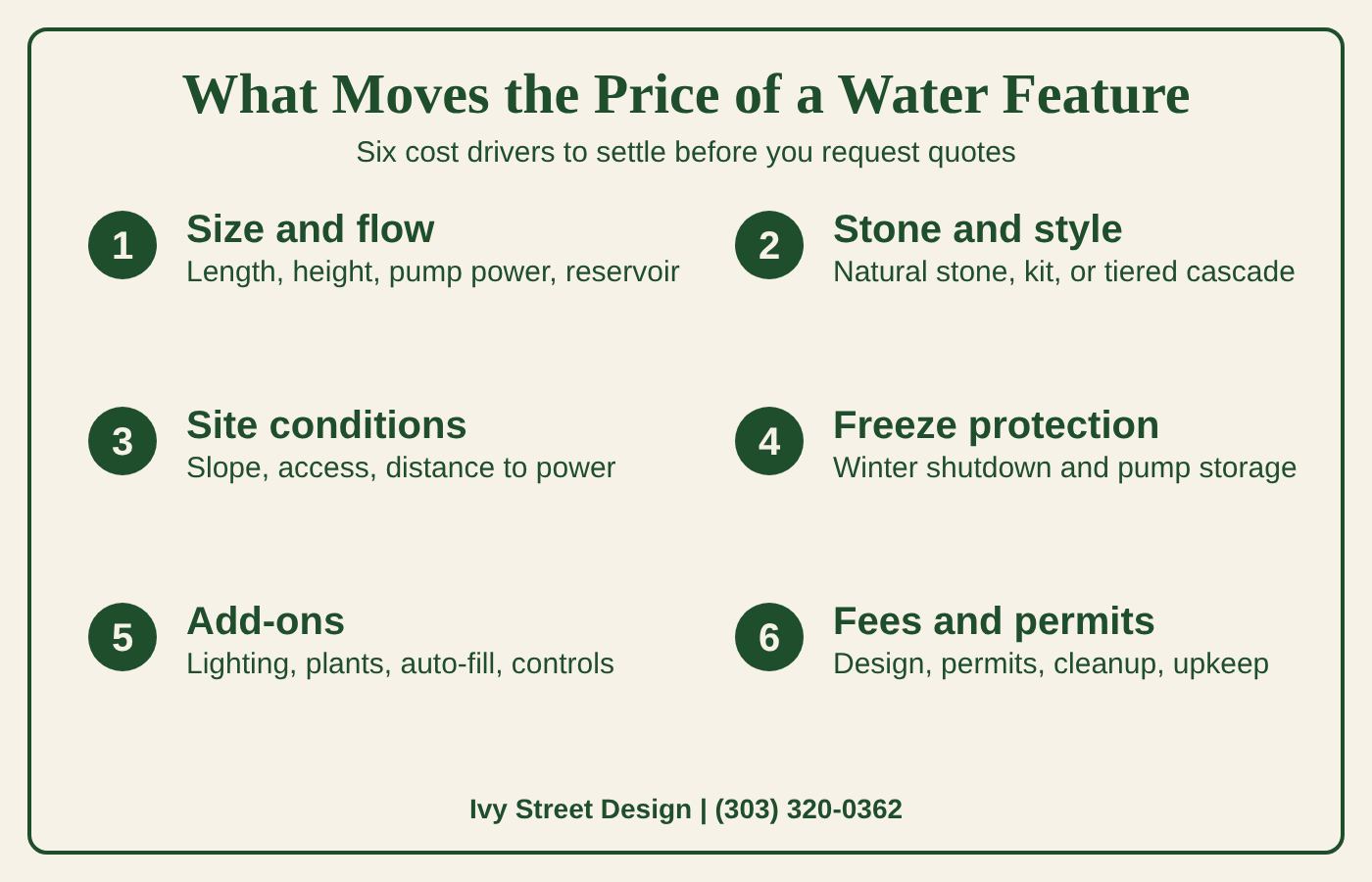
Size is the biggest factor. Larger features need more stone, a bigger reservoir, a stronger pump, and more labor hours. After size, the cost is shaped by the design style, the materials, the site, and the extras you choose. Each driver is below.
Yes. The type of feature shapes both the upfront and long-term cost. A pondless waterfall, a basin fountain, and a wall feature each need different excavation, plumbing, and stonework. Ask your designer to price two or three types against the same budget so you can see the trade-offs side by side.
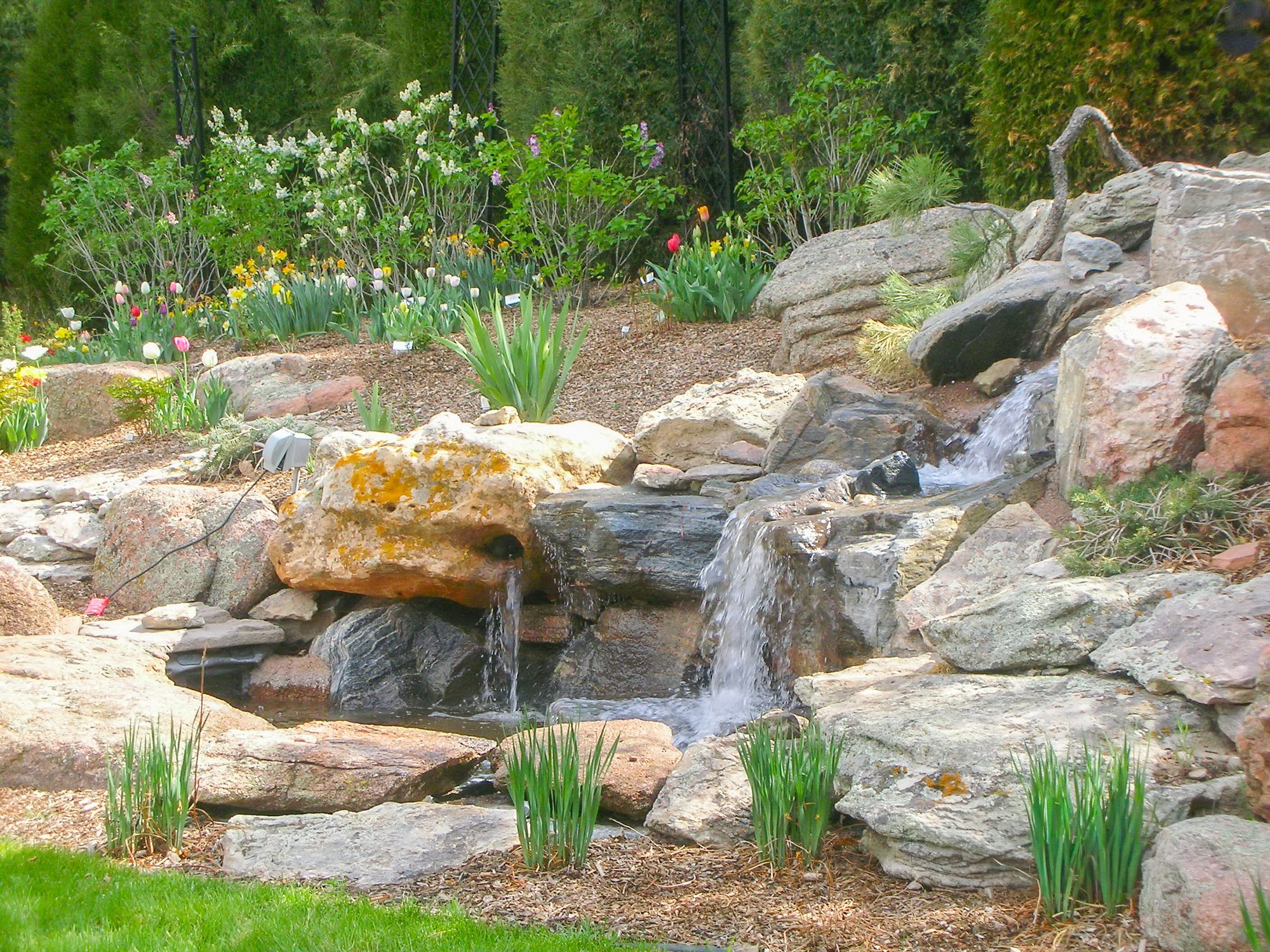
Our earlier posts on water feature options for Denver yards and backyard waterfall design cover how each type looks, sounds, and behaves in winter. Here the point is simpler: the more stone, height, and flow you ask for, the more the feature costs to build.
Site conditions change cost because they change labor. A flat yard with open access is the simplest to build. A sloped yard, a narrow side gate, or a long run to power and water takes more hours. Front yards and backyards also differ in how much prep each one needs.
Colorado winters matter too. Freezing climates call for insulation or freeze protection, so the plan for cold weather belongs in the design from day one. A site walk lets a designer spot these issues before they show up as change orders.
The install price is not the whole story. Running a feature costs electricity for the pump and any lighting. Maintenance visits, plus an occasional pump or liner replacement, are part of ownership. Ask your designer to list these ongoing items next to the build price.
Winter shutdown is a routine cost of time more than money. Aquascape, a manufacturer of pondless waterfall systems, says to turn off and remove the pump for winter storage. It advises keeping the pump in a bucket of water in a frost-free spot above 32°F, such as a basement or garage. In spring, clean the pump and check every connection before restarting.
That routine takes a person with the right know-how. If you would rather not handle it, ask who does it and what they charge.
Most professionals quote a water feature as a project, not by the square foot. A full package typically covers site prep, materials, labor, and cleanup. Design fees, permits, and cleanup are sometimes billed separately, so read the scope line by line before you compare totals.
Ivy Street Design offers design-only or design-build service. Our design process includes site analysis, a 3D presentation, and construction observation. If you want to understand how those two paths differ in accountability, read our guide to design-build versus design-only landscaping in Denver. For how design fees themselves work, see how landscape design cost is structured.
Some cities require permits for larger features or those tied to electrical work. Rules vary by municipality, so confirm the requirements for your address. Also confirm who pulls the permit and whether its fee is in your quote.
Compare quotes line by line, using the same scope for every bidder. Two totals only mean something side by side when they include the same size, stone, pump, utilities, and extras. Use this checklist when the quotes arrive.
Decide where you want the feature, what you want to hear and see, and how much upkeep you will accept. Those three answers shape the design more than any other choice. A designer can then match a feature type to your budget instead of guessing.
Bring a rough budget range, a few photos of the yard, and notes on where power and water are. That is enough for a useful first conversation.
It depends on size, stone, pump, site, and extras, so no single figure fits every yard. A site visit and a written scope give you a real number. Ivy Street Design can walk the property and explain what drives the price.
Not automatically. Cost follows size, stone, flow rate, and site work more than the label on the feature. Ask for both options priced against the same footprint.
Size is the biggest factor. Length, width, and height set the stone and excavation, while flow rate and reservoir size set the pump and liner. Larger features also take more labor hours.
Some municipalities require permits for large features or those tied to electrical systems. Rules vary by city, so check with your local building department. Ask your contractor who handles the permit and whether it is in the quote.
Expect electricity for the pump and lights, maintenance visits, and occasional pump or liner replacement. In Denver you also need a winter plan, including pump removal and storage. Ask your designer to list these costs up front.
A clear scope turns a vague budget into a design you can compare, build, and enjoy for years. Ivy Street Design can help you decide what to include and what to leave out.
Call Ivy Street Design at (303) 320-0362 or visit ivystreetdesign.com to schedule a consultation.