

Thanks! We have received your form submission, we'll get back to you shortly!
Oops! Something went wrong while submitting the form
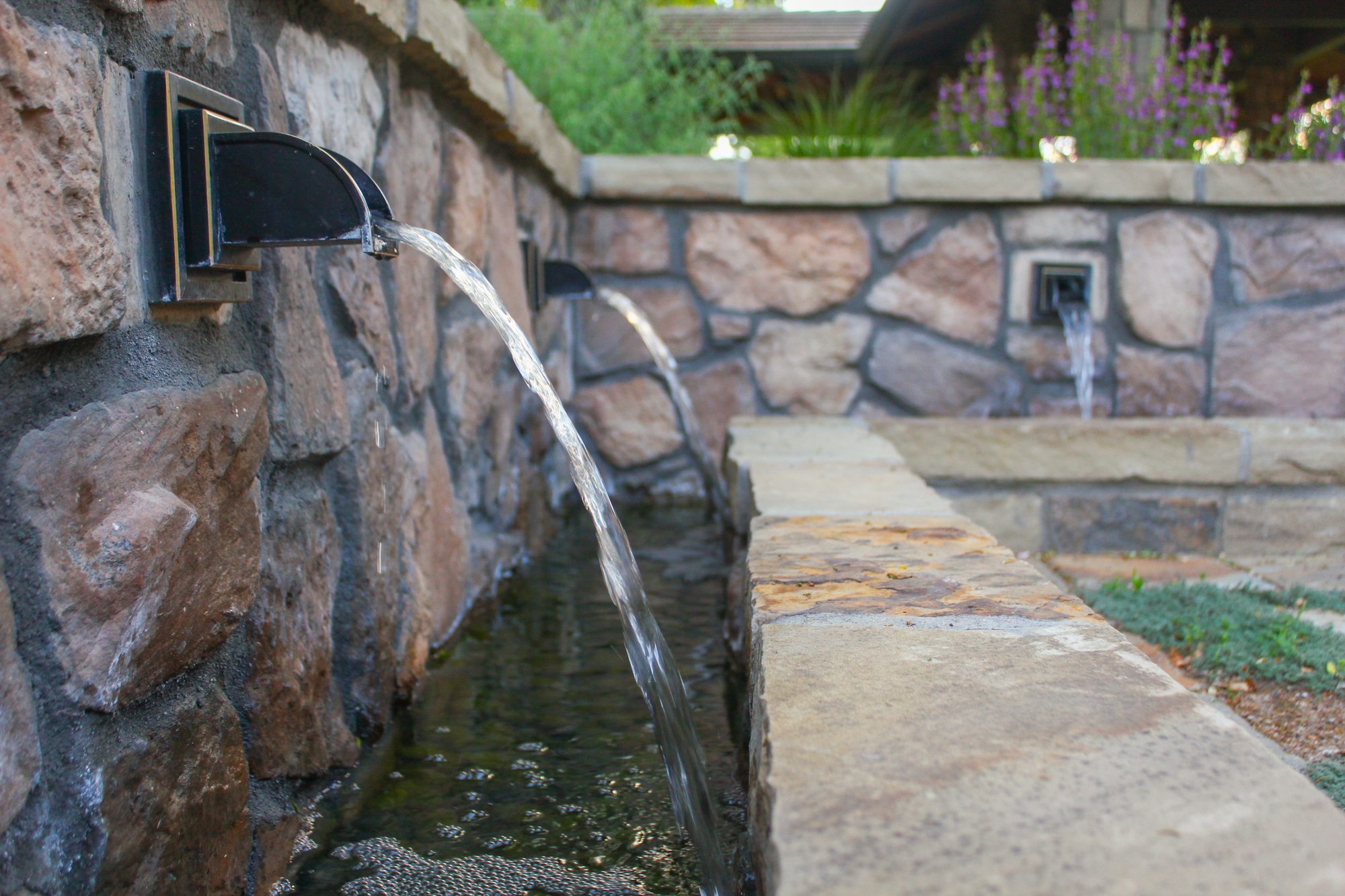
A backyard waterfall is judged by three things: how the stone looks, how the water sounds, and whether it still works in January. Here is how Ivy Street Design plans all three for Denver and Front Range yards.
Quick Summary
The best backyard waterfall design in Colorado treats stone, sound, and winter operation as one plan, not three separate decisions. Ivy Street Design has designed Denver metro landscapes since 1992, and the waterfalls that last are the ones planned from the start for how they look in summer and how they behave when the temperature drops.
This post goes deeper than our general guide to water feature design in Denver. It focuses on waterfalls only: choosing stone, shaping the sound, and deciding what to do with the pump when it freezes.
A waterfall works in Colorado when it fits the site, sounds right from where people sit, and can be shut down or monitored in winter without a struggle. Looks matter, but access to the pump and reservoir matters just as much. A beautiful waterfall that is hard to service becomes a chore.
Most of the trouble we see comes from decisions made too late. The pump vault ends up buried under finished stone. The drop is too small to be heard from the patio. The plumbing cannot be drained. Each of these is easy to avoid on paper and expensive to fix after construction.
Choose stone that echoes the materials already on your property, such as the home, the patio, and nearby walls. Natural stone looks most convincing when sizes vary and the edges are irregular. Test samples wet, because stone changes color when water runs over it.
A few principles guide the stone selection on our projects:
A stone wall can also do double duty. If your yard has a grade change, the waterfall can be built into the wall. Our guide to retaining wall design in Denver covers how walls are planned on sloped lots.
Sound comes from three things: how far the water falls, how much water moves, and what the water lands on. A taller drop and more volume make a louder, deeper sound. A short drop into a shallow channel makes a quiet trickle. You choose the sound by designing these three variables.
Here is how the common waterfall styles tend to differ:
The practical test is simple. Sit where you will actually sit, at the patio table or the fire pit, and ask what you want to hear. If you want to talk over dinner, a soft sheet works. If you want to cover street noise, a cascade carries farther. Our earlier post on pondless features and sound explains why the reservoir sits underground and how that frees up the design.
Sometimes, but it takes work. Aquascape, a pondless waterfall manufacturer, says running a waterfall year-round is possible and can create attractive ice formations, but it requires regular monitoring. The same guidance calls shutting the system down the safest and lowest-maintenance option in freezing climates.
Two points are worth knowing before you decide. First, the guidance says that if a running system is not monitored, water loss can lead to pump damage. Second, the manufacturer's pages do not give a temperature limit for running a pump, so check your own pump's instructions before you plan to run it through freezing weather.
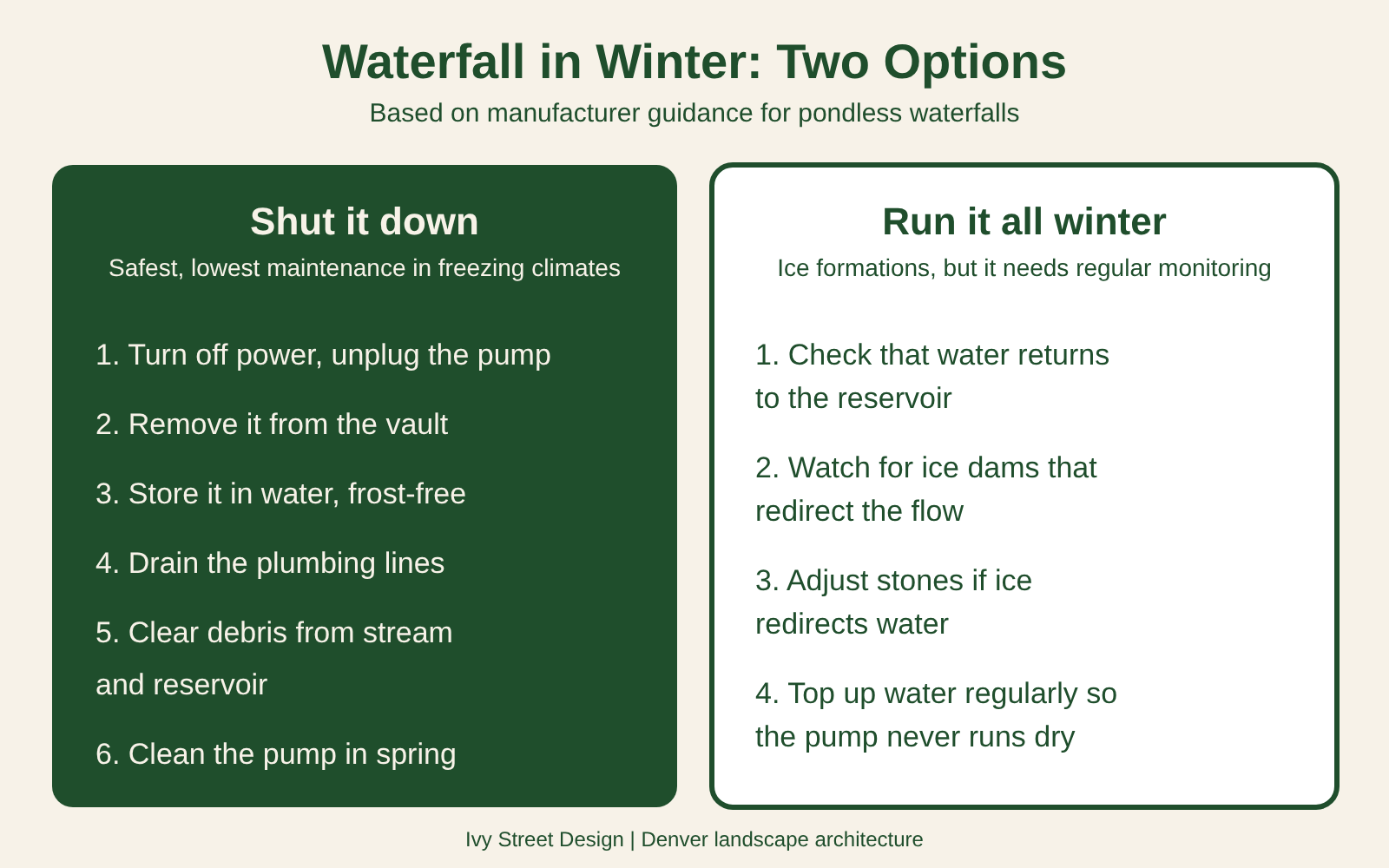
Manufacturer instructions for a pondless waterfall shutdown include these steps:
If you want the sound and the ice, plan on checking the waterfall often. The manufacturer's guidance for a running system includes these points:
A winter plan should be part of the design, not an afterthought. Put the pump vault where you can reach it in snow. Make the plumbing easy to drain. Leave the reservoir open to inspection. These choices decide whether winter care is a quick check or a major job.
Questions we work through with homeowners before a waterfall is built:
A waterfall should relate to the patio, the planting, and the lighting, not sit apart from them. Seating distance sets the volume you need. Grade changes can host the fall. Lighting extends the feature into the evening and makes winter ice visible.
Our design process starts with site analysis, moves to a 3D presentation so you can see the waterfall in your yard before construction, and includes construction observation. We offer design-only or design-build, so you can take the plans to your own contractor or have us carry the project through. If you are still deciding whether a waterfall is right for your yard, our water feature design service is a good place to start.
No. A pondless waterfall recirculates water from a hidden reservoir, so there is no open pond. This keeps the sound and movement while removing the standing water. Our water feature guide explains the difference.
Manufacturer guidance says shutting down is the safest option in freezing climates, and that running through winter needs regular monitoring. If the water level drops, the pump can be damaged. Check your pump maker's instructions for any temperature limits.
Check often that water is returning to the reservoir. If ice starts to redirect the flow, adjust the stones so the water goes back into the basin. Good design makes those stones easy to reach.
Evaporation and ice formation both lower the water level in a running system. Adding water regularly keeps the pump from running dry, which is what damages it.
The best stone is the one that fits your home and landscape. Rough-cut stone suits rustic and mountain-modern settings, and cleaner stone suits contemporary homes. Look at samples wet and ask your supplier about cold-weather performance.
Call Ivy Street Design at (303) 320-0362 or visit ivystreetdesign.com to schedule a consultation.
Sources: Aquascape support articles How To Winterize a Pondless Waterfall and What should I do with my Pondless Waterfall in the winter.