Thanks! We have received your form submission, we'll get back to you shortly!
Oops! Something went wrong while submitting the form
Design-build vs design-only landscaping comes down to contracts. Design-build means one firm designs your landscape and builds it under one contract. Design-only means a designer delivers the plan and you hire a separate contractor to build it. Ivy Street Design has designed Denver metro landscapes since 1992 and offers both, so the real question is who you want to hold accountable when something goes wrong.
Quick Summary
Design-build combines design and construction responsibilities under a single contract. Design-only separates them: a designer produces the plans, and a different contractor builds from those plans under a second contract. Ivy Street Design provides both models for Denver homeowners.
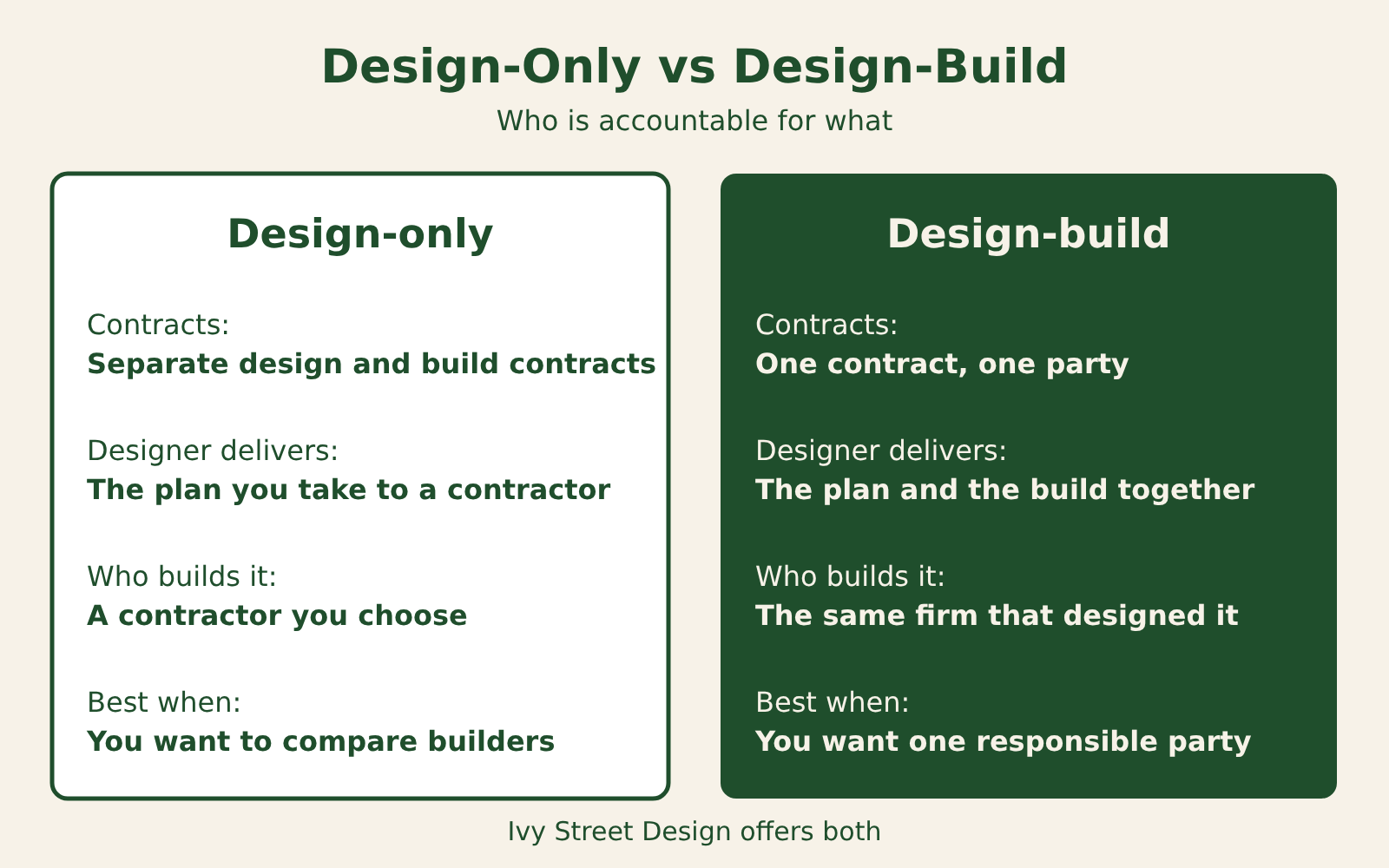
The terms come from the wider construction world, where design-build is described as one contract with one party, and the traditional alternative is called design-bid-build, with separate contracts for design and construction. The same split applies to a residential landscape. The only question is how many companies you are signing with, and who answers to you.
The infographic below compares the two paths side by side.
One firm. In design-build, the owner manages a single contract with a single point of responsibility. If a wall, a drain, or a planting plan does not work, you have one company to call, and that company designed what it built.
Industry writing on design-build describes this as having fewer places to hide, because the people who drew the plan and the people who built it are on the same team. For a Denver yard, that matters most on projects where design and construction are tightly linked: retaining walls, drainage, grade changes, steps, and lighting.
It also removes a common handoff problem. A designer can draw something that a builder then has to interpret. When one firm does both, the person reading the plan on site is usually the person who helped write it.
Two parties, each for their own piece. The designer is accountable for the plan. The contractor is accountable for building it. You hold both contracts and sit in the middle, which gives you control but also makes you the coordinator when the two disagree.
Design-only has real advantages. You own a complete set of plans, you can ask more than one contractor to price the same scope, and you can choose a builder based on your own references and comfort. Colorado State University Extension suggests selecting a designer based on qualifications and a good personal reference, and the same logic applies when you pick the builder.
The tradeoff is coordination. When the plan and the built result do not match, you need a clear way to settle whose responsibility it is. That is why construction observation by the designer is worth asking for even on a design-only job.
The two models differ in contracts, pricing, control, and accountability. Design-build is simpler to manage, and design-only gives you more room to compare builders. Neither is better in every case, and the right choice depends on the project and on how involved you want to be.
Projects where design decisions and construction conditions affect each other fit design-build best. Sloped yards, retaining walls, drainage, outdoor kitchens, fire features, and lighting all depend on how the work is actually built. One accountable firm keeps those decisions connected.
Design-build also suits owners who value a streamlined process. If you do not want to interview contractors, compare bids, and referee a handoff, a single contract removes those steps.
Our guide to sloped backyard landscaping in Colorado shows why drainage, walls, and steps benefit from being planned and built as one system.
Design-only makes sense when you want to choose your own builder, already have a contractor you trust, or plan to build in phases over several years. It also works when you want to compare pricing on a complete set of plans before committing to construction.
A good design-only plan is detailed enough that any qualified contractor can price and build it the same way. Ask the designer what the plan set includes, whether they will answer contractor questions, and whether they will visit the site during construction.
Design-only is also a sensible first step. You can commission the design now, during the colder months, and decide on the builder later. Our guide on when to start a landscape project in Colorado explains why winter works well for design.
The design process is the same either way. Ivy Street Design starts with site analysis, develops the plan, presents it in 3D so you can see the result before construction, and offers construction observation. After that, you choose whether to keep construction with us or take the plan to a contractor.
This matters because the design quality should not depend on how you buy it. Choosing design-build is a decision about accountability and convenience, not a different level of design. Choosing design-only is a decision about control and flexibility.
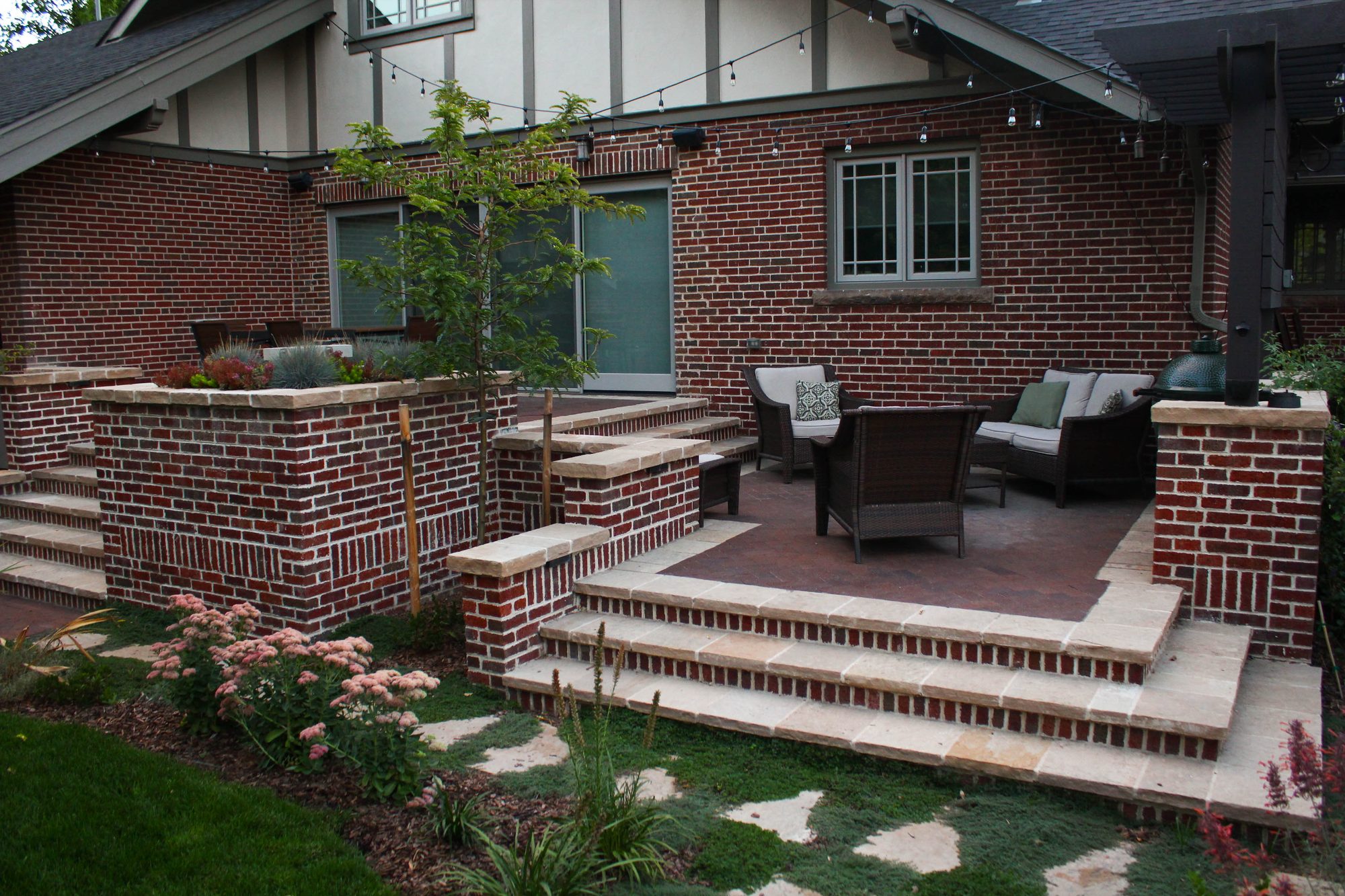
The photo below shows a patio, brick walls, and stone steps, the kind of connected hardscape where design and construction decisions are closely tied.
Not necessarily. The cost depends on scope, site conditions, materials, access, and design level, not on the contract model. Design-build removes a separate bidding step, while design-only lets you compare builder pricing. Ask for the fee structure in writing under either model.
Yes. Ivy Street Design offers design-only service, so you can take the finished plan to a contractor of your choice. We recommend asking for construction observation so the build stays matched to the design.
In design-build, one firm is responsible for both the plan and the construction. In design-only, the contractor is responsible for how it was built and the designer for the plan, which is why the contracts should state each role clearly.
It narrows who builds, but it does not have to narrow the design. You still approve the plan and the 3D presentation before construction begins. If you want to compare builders, design-only is the better fit.
No. Start with how connected the design and the construction are. Walls, drainage, and grade work favor one accountable firm. A simple planting plan or a phased project may suit design-only. A consultation can settle the question.
Call Ivy Street Design at (303) 320-0362 or visit ivystreetdesign.com to schedule a consultation.