

Thanks! We have received your form submission, we'll get back to you shortly!
Oops! Something went wrong while submitting the form

Every Denver yard has shade. The north side of the house where morning sun never reaches. The area beneath that mature maple the previous owners planted thirty years ago. The narrow passage between the garage and the fence where light barely penetrates. These spots frustrate homeowners who assume shade means bare soil, struggling lawn, and limited options.
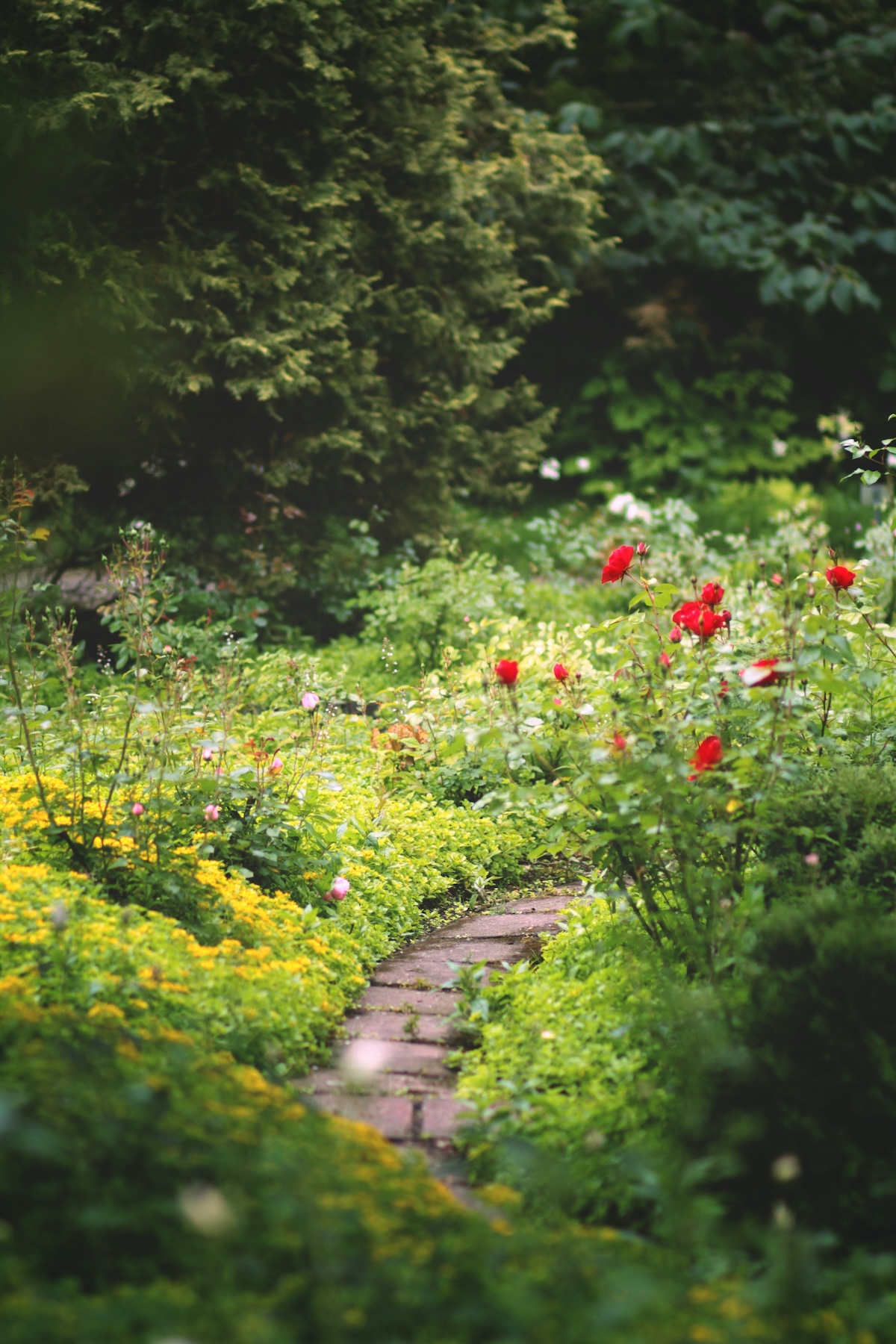
But shade isn't a problem to solve—it's an opportunity to create something entirely different. While sun-baked gardens demand constant watering and wilt through July and August heat, a well-designed shade garden becomes a cool retreat, a place that feels restful precisely because it offers relief from Colorado's intense high-altitude sun.
Here's something that surprises many gardeners: partial shade in Colorado often equals full sun elsewhere. At 5,280 feet, sunlight is approximately 30% more intense than at sea level. The thin atmosphere filters less ultraviolet radiation, which is why you sunburn faster here—and why plants labeled "full sun" in Ohio or Georgia often perform better in Colorado's partial shade.
This intensity means plants that typically need six hours of direct sun may thrive with four hours of morning light and afternoon protection. Colorado blue columbine, our state flower, grows wild at high elevations where it receives intense but brief sun exposure—and often performs better on the Front Range when given partial shade that mimics those mountain conditions.
The practical implication: your palette of "shade plants" is larger than you might expect. Many perennials marketed for full sun actually prefer some protection from Colorado's relentless afternoon exposure, especially when temperatures climb above 90 degrees.
Not all shade is created equal, and the type you have determines which plants will thrive and which will struggle.
Dappled shade occurs beneath trees with open canopies—honey locust, aspen, and many deciduous trees that allow filtered light to reach the ground. This is often the easiest shade condition to plant because light levels shift throughout the day, giving plants enough energy to bloom while protecting them from the harshest exposure.
Morning sun with afternoon shade is the ideal condition for many shade-loving plants in Colorado. The gentler morning light provides energy for growth and flowering, while afternoon shade protects foliage from scorching during the hottest part of the day. East-facing beds and areas shaded by the house after midday fall into this category.
Afternoon sun with morning shade is trickier. The intense afternoon sun can overwhelm plants with delicate foliage, even those labeled "part shade." West-facing exposures require tougher plants that can handle heat stress.
Deep shade receives less than two to three hours of direct or indirect light daily. North-facing beds against foundations, areas under dense conifers, and narrow side yards often fall into this category. Plant options narrow considerably here, but beautiful gardens remain possible with the right approach.
Dry shade is the most challenging condition—and unfortunately common in Denver. Areas beneath mature trees or protected by building overhangs receive little natural rainfall, and tree roots compete aggressively for whatever moisture exists. Success here requires both the right plant selection and soil improvement.
If shaded areas present challenges, dry shade earns its reputation as one of the most difficult conditions in gardening. Beneath established trees, the canopy intercepts rainfall while root systems absorb moisture from the soil, leaving very little for smaller plants. Add Denver's semi-arid climate to the equation, and you have genuinely tough growing conditions.
The first step is improving the soil's ability to hold moisture. Adding two to three inches of organic compost annually builds humus that retains water between the soil particles. Mulching with shredded bark or wood chips further reduces evaporation and keeps roots cool.
Hardscaping can help more than you might expect. Stone pathways, retaining walls, and terracing create pockets where rainfall collects and seeps slowly into the ground rather than running off. These features also reduce the area that needs planting, concentrating your efforts where they'll have the most impact.
For plant selection, look to species native to forest understories—they've evolved to compete with tree roots for limited resources. These plants won't just survive—they'll establish and spread once their roots extend deep enough to access moisture below the tree's most active root zone.
Shade gardens succeed when they embrace what shade does well rather than fighting against its limitations. The goal isn't to replicate a sunny border in less light—it's to create something that feels intentional, restful, and appropriate to the conditions.
Flowers in shade gardens are bonuses rather than the main show. Most shade plants bloom for a few weeks rather than the months of color you might expect from sun-loving perennials. Instead, build your design around foliage that provides interest from spring through fall.
This shift in thinking opens remarkable possibilities. Foliage offers texture, form, and color that flowers can't match for sustained impact. A single hosta provides months of bold, sculptural presence. Ferns contribute delicate, layered texture. Coral bells (Heuchera) deliver foliage in colors from chartreuse to nearly black, creating visual excitement without a single bloom.
Foliage texture falls into three categories: fine, medium, and coarse (bold). The key to dynamic shade design is contrasting these textures rather than clustering similar ones together.
In shaded spaces, dark foliage visually recedes and can disappear entirely in deep shade. Light colors—chartreuse, gold, silver, white, and cream—seem to glow, making shady spaces feel brighter and more inviting.
Shade gardens benefit from vertical layering—the same structure you'd find in a natural forest. Start with trees and large shrubs as the canopy layer. Add smaller shrubs and tall perennials as an understory. Fill the ground level with spreading perennials and groundcovers.
This layered approach creates depth and visual complexity while using space efficiently. A single plane of plants at ground level feels flat and unfinished; multiple layers create the sense of abundance and maturity that makes gardens feel established.
The following plants have proven themselves in Colorado's unique conditions—shade-tolerant but also adapted to our alkaline soil, dry air, and dramatic temperature swings.
Sweet woodruff (Galium odoratum) forms a dense mat of fragrant, whorled foliage topped with tiny white flowers in spring. It spreads by creeping roots, filling in bare areas while remaining easy to control.
Creeping Oregon grape (Mahonia repens) is a Colorado native with holly-like evergreen leaves that turn deep red-purple in fall. Yellow spring flowers give way to blue berries. It handles dry shade remarkably well.
Wild strawberry (Fragaria virginiana) produces tiny but intensely sweet fruit in partial shade. Even in shade too deep for fruiting, it forms an attractive groundcover with three-part leaves that turn red in fall.
Coral bells (Heuchera) offer extraordinary foliage diversity—from 'Caramel' with its warm amber tones to 'Obsidian' in near-black purple. Low-growing and evergreen through mild winters, they perform reliably in partial to full shade.
Hostas remain the workhorses of shade gardens, and for good reason. They're tough, long-lived, and available in sizes from miniature to massive. 'Sum and Substance' produces enormous chartreuse leaves that light up dark corners, while 'Halcyon' offers elegant blue-gray foliage with exceptional slug resistance. Note that in containers, hostas grow significantly larger than in the ground, where they compete with tree roots.
Bleeding heart (Dicentra) delivers some of the most delicate beauty in the spring shade garden. Heart-shaped flowers dangle from arching stems above fern-like foliage. The old-fashioned variety goes dormant by midsummer; fringed bleeding heart (Dicentra eximia) maintains foliage and reblooms through fall.
Brunnera (Brunnera macrophylla), particularly the silver-leaved 'Jack Frost,' provides forget-me-not blue flowers in spring above heart-shaped leaves that look good all season. It's one of the few plants that truly thrives in dry shade once established.
Astilbe adds feathery flower plumes in white, pink, red, and purple to midsummer shade gardens. The fern-like foliage provides texture even when not in bloom. These plants need consistent moisture to perform well.
Solomon's seal (Polygonatum) grows arching stems lined with paired leaves and dangling white bell flowers. The variegated form adds cream-edged foliage that brightens shaded spaces. It's elegant, long-lived, and completely carefree.
Lungwort (Pulmonaria) offers spotted foliage and early spring flowers in blue, pink, or white—often all on the same plant as blooms age. It thrives in moist shade and provides interest when little else is showing color.
Ferns are foundational in shade gardens, contributing fine texture that contrasts beautifully with bold-leaved plants.
Maidenhair fern (Adiantum pedatum) is a native species with delicate, fan-shaped fronds on wiry black stems. It requires consistent moisture but rewards with exceptional elegance.
Autumn fern (Dryopteris erythrosora) produces bronze-red new fronds that mature to deep green—like watching fall and spring simultaneously. It's more tolerant of dry conditions than many ferns.
Lady fern (Athyrium filix-femina) is a native with lacy, upright fronds that add vertical interest. It adapts well to various shade conditions and pairs beautifully with hostas and astilbe.
Hydrangea is perhaps the most popular flowering shrub for shade, and several types perform well in Colorado. Smooth hydrangea (H. arborescens) 'Annabelle' produces enormous white flower heads and handles our climate better than mopheads. Panicle hydrangea (H. paniculata) tolerates more sun and blooms on new wood, making it more reliable in areas with late spring freezes.
Japanese kerria blooms reliably in deep shade with cheerful yellow flowers on bright green stems. The double-flowered form provides longer bloom time; the stems add winter interest.
Redtwig dogwood tolerates shade better than many shrubs and provides brilliant red stems in winter. It needs consistent moisture and room to spread.
Sumac (Rhus) might seem surprising for a shade plant, but fragrant sumac (Rhus aromatica) and smooth sumac (Rhus glabra) tolerate partial shade remarkably well. Their brilliant fall color and wildlife value make them worth considering for larger shaded areas.
Several native plants that grow in mountain forest understories adapt well to Front Range shade gardens:
Colorado blue columbine (Aquilegia caerulea) often performs better in partial shade at lower elevations, protected from the intense sun that can stress it in exposed locations.
Wild geranium (Geranium caespitosum) produces pink flowers above low-growing foliage and self-seeds gently to fill in shaded areas.
Chokecherry (Prunus virginiana) grows as either a large shrub or small tree, tolerating anything from full sun to fairly dense shade. White spring flowers attract pollinators; red berries feed birds.
Wax currant (Ribes cereum) thrives in partial shade, offering pink spring flowers and fiery fall foliage. It's drought-tolerant once established.
Mountain snowberry (Symphoricarpos oreophilus) handles considerable shade, producing pink bell-shaped flowers followed by white berries that persist into winter.
North-facing beds against the house receive little direct sun and stay relatively cool and moist—ideal conditions for many shade plants. This is often the easiest shade situation to address.
Focus on foliage contrast: bold hostas against fine-textured ferns, silver brunnera with deep burgundy coral bells. Add early spring bulbs for color before the perennials emerge. Snowdrops, scilla, and winter aconite all bloom in the brief window before trees leaf out and provide surprisingly cheerful late-winter interest.
Established trees create the most challenging conditions: competition for water and nutrients, dense root systems that make digging difficult, and canopies that intercept rainfall.
Start by improving soil without disturbing roots. Rather than digging, spread two to three inches of compost on the surface and let it work into the soil naturally over time. Plant small—four-inch pots establish more easily than larger specimens because they require smaller planting holes that disturb fewer roots.
Choose tough, adaptable plants: Oregon grape, barrenwort (epimedium), bigroot geranium, and snowberry all compete successfully with tree roots once established. Water new plantings deeply but infrequently to encourage roots to grow downward, away from the tree's most active root zone.
Side yards between houses present unique challenges: shade from structures, limited light from above, and often poor soil compacted during construction.
Rather than fighting these conditions, consider embracing the space's inherent character. A gravel pathway with simple plantings of shade-tolerant groundcovers can transform a neglected passage into a deliberate garden feature. Sweet woodruff, Japanese pachysandra, or even moss—if conditions are moist enough—create green carpets that require no mowing and little maintenance.
If the space receives enough light for more ambitious planting, layer ferns against one wall with hostas at their feet and a groundcover to unify the composition.
Deciduous trees with open canopies create the most versatile shade conditions. Light levels shift as the sun moves, providing enough energy for flowering while protecting plants from the most intense exposure.
This is your opportunity to grow plants that might struggle in full sun at our altitude. Hydrangeas, astilbe, bleeding heart, and the full range of hostas perform beautifully in these conditions. Spring bulbs naturalize effectively since they bloom before trees leaf out, then die back gracefully as the canopy fills in.
Shade gardens require a different mindset than sunny borders. Growth is slower, color comes more from foliage than flowers, and the aesthetic tends toward restful rather than exuberant. But these qualities are exactly what make shade gardens valuable.
In a climate where sunny spaces demand constant attention—watering, deadheading, replacing plants that succumb to heat and drought—shade gardens offer relative ease. Once established, many shade plants require only annual cleanup and occasional division. The investment pays dividends in reduced maintenance and summer comfort.
The shaded corner of your yard isn't a problem space. It's an opportunity to create something different: a cool retreat from Colorado's intense sun, a place where texture and form take precedence over flashy color, a garden that feels peaceful precisely because it offers contrast to the brightness everywhere else.
Working with shade requires understanding Colorado's unique conditions—the intense altitude sun that makes "partial shade" here different from anywhere else, the dry climate that challenges traditional shade plants, and the design principles that create beauty when flowers take a back seat to foliage.
At Ivy Street Design, we've spent three decades creating shade gardens that thrive in Colorado's challenging conditions. We know which plants perform reliably, how to improve difficult soil without damaging tree roots, and how to design spaces that embrace shade rather than fight it.
If your yard includes those tricky shaded areas that have resisted your efforts, contact us for a consultation. Let's turn your challenging shade into your garden's most peaceful retreat.