

Thanks! We have received your form submission, we'll get back to you shortly!
Oops! Something went wrong while submitting the form
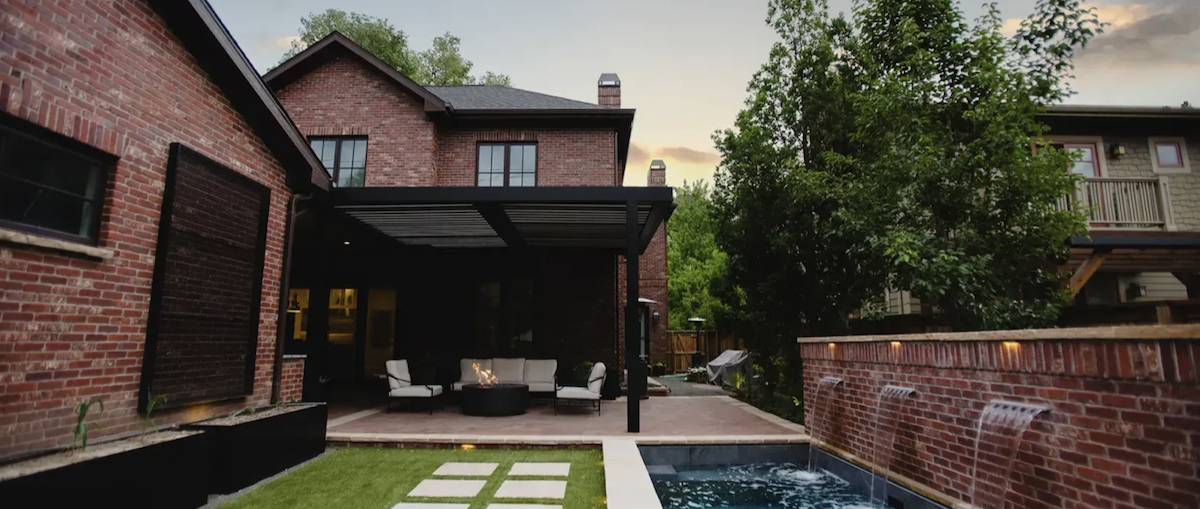
Your patio takes center stage during summer as the ideal place for hosting and relaxing. But if you're like most homeowners, you probably feel it's underutilized during the rest of the year. Too hot in July. Too snowy in January. Too unpredictable during spring's afternoon thunderstorms.
The right patio cover changes everything. It transforms a fair-weather space into a genuine extension of your home, usable across all four seasons. And in Colorado, where we enjoy more hours of sunshine than Tampa or San Diego, that's a significant upgrade to how you actually live in your house.
From simple shade solutions to full outdoor room builds, there are covered patio options for every budget and style. The key is matching the solution to both your lifestyle and Colorado's unique climate demands.
Denver averages about 56 inches of snow annually, spread across seven months from October to May. Our summers bring intense afternoon sun and fast-moving thunderstorms. Spring and fall swing wildly between pleasant and challenging, sometimes within the same afternoon.
Without protection, your patio sits unused for much of the year. With the right cover, it becomes functional in conditions that would otherwise send you inside. A properly designed covered patio extends your outdoor living season by months, not weeks.
The sun exposure factor deserves particular attention. Denver's high altitude means stronger UV rays than lower elevations. That intense sunshine that feels so good on a crisp October morning becomes punishing by July afternoon. A patio cover lets you control solar exposure, staying comfortable when direct sun would drive you indoors.
And then there's the entertainment value. Colorado's weather can shift rapidly, but a covered patio keeps you and your guests comfortable when afternoon storms roll through. Rather than scrambling to move furniture and food inside, you simply watch the weather pass from the comfort of your outdoor room.
Requests for pergolas continue rising, and for good reason. These structures provide shade and definition while remaining open enough to feel connected to the surrounding landscape. They work beautifully next to pools, over outdoor kitchens, or as standalone gathering spaces.
Traditional pergolas with open slat roofs offer filtered shade, the classic dappled light effect that feels quintessentially outdoor. Modern versions take functionality further with adjustable louvers that let you control exactly how much sun reaches the space beneath.
Louvered pergolas have gained serious traction in Colorado specifically because of their adaptability. Adjustable slats allow you to open fully for maximum sun exposure on cool mornings, partially close for comfortable afternoon shade, or seal completely when rain threatens. At the push of a button, your patio transforms from sun-soaked to fully protected.
For Colorado's snow loads, aluminum louvered pergolas outperform traditional wood structures. Quality systems feature dual-walled louvers engineered to handle 50 to 70+ pounds of snow per square foot, far exceeding what most Denver storms deliver. Built-in gutter systems channel snowmelt away, preventing leaks and keeping furnishings dry so you can enjoy the space even in winter.
Some systems include temperature sensors that automatically open louvers when temperatures drop below freezing, preventing snow accumulation on the roof. Rain sensors detect moisture and close louvers automatically, protecting outdoor furniture when storms arrive while you're away.
The investment in a quality louvered pergola system ranges from mid-four-figures for basic manual models to five figures for fully motorized, sensor-equipped, multi-zone systems. But the extension of usable outdoor time often justifies the cost, essentially adding functional square footage to your home that you'll use daily rather than occasionally.
If complete weather protection is your priority, solid patio roof structures deliver. These permanent covers attach to your home's existing roofline or stand as independent structures, providing full shelter from sun, rain, and snow.
Extending your home's roofline over the patio creates the most cohesive, polished appearance. The covered space feels like a natural extension of the house rather than an add-on. This approach typically requires professional installation and may need permits, but it provides maximum protection and adds measurable value to your property.
Freestanding pavilions offer similar protection without structural attachment to your home. These work well for properties where the patio sits away from the main structure, or when homeowners prefer the aesthetic of a distinct outdoor building. A pavilion with a stone fireplace, built-in grill, and comfortable seating creates an outdoor living room that functions in any weather.
Materials for solid roof covers include wood, aluminum, and composite options. Wood delivers warmth and traditional character but requires regular maintenance against Colorado's intense sun and freeze-thaw cycles. Aluminum offers durability and minimal maintenance with various finishes that can mimic wood grain or complement modern architecture. Insulated roof panels add climate control benefits, keeping covered spaces cooler in summer and warmer in winter.
For homeowners who want coverage options without permanent structures, retractable awnings provide an elegant solution. These systems mount to your home's exterior wall and extend or retract based on your needs.
The beauty of retractable awnings lies in their adaptability. Want full sun for a winter afternoon? Retract the awning completely. Need shade for a summer party? Extend full coverage. Expecting a storm? Retract to protect the awning fabric, or on some models, close to provide temporary rain protection.
Quality retractable awnings include sensors that auto-retract when wind or other elements risk damage. This protects your investment and means you don't need to monitor weather constantly. Motorized operation puts control at your fingertips, literally: many systems now integrate with smartphone apps for remote operation.
Installation is relatively simple, typically requiring attachment to an exterior wall and electrical connection for motorized models. A professional can have most awnings operational in a matter of hours. Prices range from under a thousand for basic manual models to several thousand for larger motorized systems with weather sensors.
For Colorador's climate, look for awnings rated for wind resistance and UV stability. Fabric quality matters enormously for longevity, cheaper materials fade and degrade quickly under Colorado's intense sun.
If your property includes an elevated deck, you're sitting on untapped covered patio potential. The space beneath the deck can become a dry, protected outdoor room with the addition of an underdeck drainage system.
These systems install beneath the deck boards, capturing water and channeling it away from the space below. The result is a dry ceiling overhead that can be finished with soffits, lighting, and ceiling fans to create a fully functional outdoor room.
The appeal is obvious: you gain covered outdoor space without adding any new structure to your property. The deck above provides the coverage; you're simply making that coverage functional for the area beneath.
Under-deck spaces work particularly well for poolside lounging, outdoor dining areas, or secondary entertaining zones. Add comfortable furniture, perhaps a fireplace or fire pit, and you've created an entirely new outdoor room from previously unused space.
Gazebos provide complete coverage in a freestanding structure that can be placed anywhere in your landscape. Unlike pergolas with their open roofs, gazebos feature fully enclosed tops that block sun and rain entirely.
Traditional gazebo designs range from classic octagonal shapes to modern rectangular forms. Materials include wood for warmth and character, metal for durability, and vinyl for low maintenance. Some gazebos include built-in screens to keep insects out while allowing airflow.
For Colorado properties, gazebo placement deserves careful consideration. Position the structure to capture views you want to emphasize while blocking less desirable sightlines. Consider sun angles throughout the day and across seasons. Orient seating areas to take advantage of morning sun in winter and shade during summer afternoons.
A well-placed gazebo becomes a destination within your landscape, a retreat you walk to when you want to escape the house without leaving home. Add comfortable seating, perhaps a small fire feature, and you've created a genuine outdoor room that functions year-round.
For a softer, more natural approach to patio coverage, consider using climbing plants to create a living canopy. Any structure with overhead framework, whether a pergola, arbor, or trellis, can support vines that eventually form a botanical ceiling.
The effect is magical: sitting beneath a cloud of wisteria blooms in spring, surrounded by the fragrance of jasmine in summer, watching grape leaves turn color in fall. Living canopies change with the seasons in ways that static covers cannot. For sunny patios, climbing roses, clematis, and trumpet vine work beautifully.
The tradeoff with botanical canopies is control. Living plants don't close when rain threatens. They drop leaves in fall, requiring cleanup. They need pruning and training to maintain attractive coverage. But for homeowners who love the integration of structure and nature, the rewards outweigh the maintenance.
Whatever cover style you choose, adding a fire feature dramatically extends how many months you'll use the space. A fireplace or fire pit provides warmth on cool evenings, making spring and fall patios genuinely comfortable and enabling winter use that would otherwise be impossible.
Fire features also create natural gathering spots. Something primal draws people toward flames. A covered patio with a fire element becomes a destination that family and guests gravitate toward naturally.
For covered patios, proper ventilation is essential when including fire features. Solid roof covers need adequate clearance and airflow to prevent smoke accumulation and heat damage. Pergolas with open or louvered roofs handle fire features more easily, allowing smoke to dissipate naturally.
Gas fire features offer convenience and cleaner burning than wood, important considerations for covered spaces. Wood-burning options deliver the crackle and scent that many people prefer but require more careful placement and chimney considerations.
A cover alone creates three-season functionality. Adding heating and cooling elements achieves genuine four-season outdoor living.
Infrared patio heaters mount to pergola beams or solid roof structures, delivering energy-efficient warmth to specific zones. Unlike traditional heaters that warm air, infrared technology heats objects directly, meaning you feel warmth immediately without waiting for air temperature to rise. Quality heaters maintain comfortable conditions even on cold winter evenings.
Ceiling fans provide summer cooling and improve comfort during shoulder seasons. Moving air feels cooler than still air, extending comfort into temperatures that would otherwise drive you inside. Fans also help dissipate heat from fire features, improving comfort around fireplaces and fire pits.
Motorized screens add another layer of climate control. These retractable walls deploy at the touch of a button, blocking wind and containing warmth from heaters while still allowing fresh air circulation. They also provide shade and privacy when desired, adding functionality beyond just climate management.
The best covered patio solution depends on how you actually want to use the space, your property's specific conditions, and your budget for both construction and ongoing maintenance.
Start by observing your current patio through the seasons. When does the harsh sun make it uncomfortable? When do storms send you inside? What views do you want to preserve, and what would you prefer to screen? These observations guide design decisions more reliably than any trend or generic recommendation.
Consider the relationship between your patio and your home's interior. The most successful covered patios feel like genuine room extensions, with sight lines and traffic patterns that connect indoor and outdoor spaces naturally. Think about how you'll move between spaces, where you'll position furniture, and how the covered area relates to the rooms it adjoins.
And factor in Colorado's climate specifics: the snow loads that structures must handle, the intense UV exposure that ages materials quickly, the rapid weather changes that reward flexibility. Solutions that work beautifully in milder climates may not hold up here. Local expertise matters for getting the details right.
At Ivy Street Design, we specialize in outdoor living spaces designed specifically for Denver's climate and conditions. From initial concept through construction, our team helps you create covered patios that extend your outdoor season by months, not weeks.
Ready to make your patio work year-round? Contact us to start planning your covered outdoor space.