

Thanks! We have received your form submission, we'll get back to you shortly!
Oops! Something went wrong while submitting the form
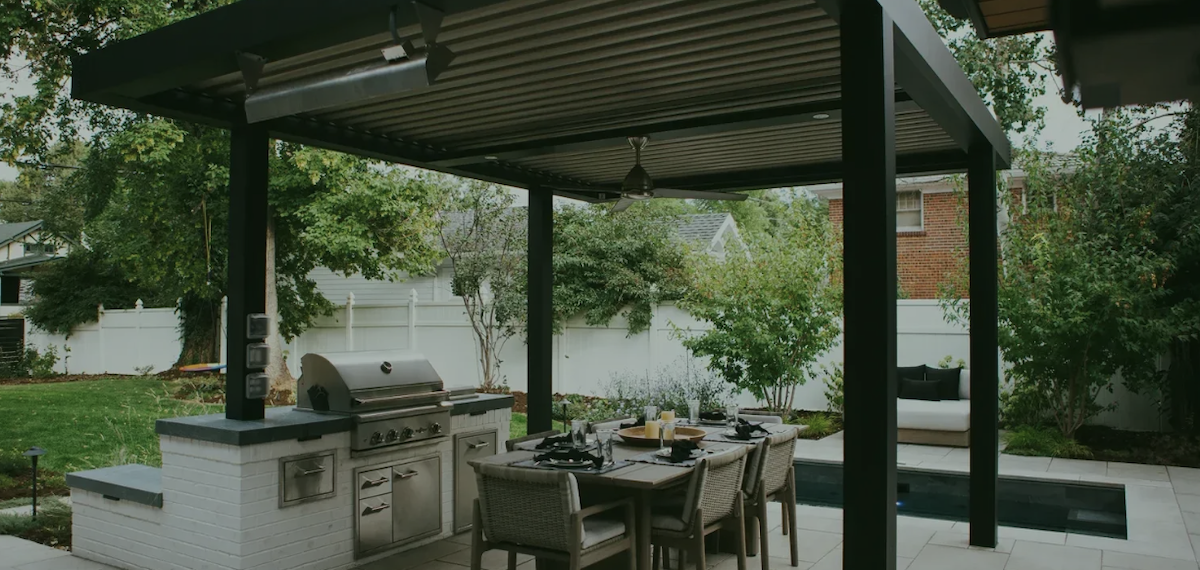
There's a particular satisfaction to cooking outside in Colorado. The afternoon sun warms your back as you prep ingredients. The smell of something excellent on the grill mixing with that distinctive high-altitude crispness.
Friends gathered around with drinks in hand, conversation flowing easily between the kitchen and seating area.
The challenge isn't whether an outdoor kitchen makes sense here. It's designing one that handles our unique conditions: the intense UV exposure, dramatic temperature swings, freeze-thaw cycles, and occasional afternoon thunderstorms that arrive without warning.
Please note, it’s important to check local regulations for feasibility, permit, and setback requirements.
Denver's climate is genuinely exceptional for outdoor cooking. The low humidity means food takes on smoke and char beautifully, without that waterlogged quality you get in more humid regions. Cool evenings, even in summer, make gathering around a hot grill comfortable rather than oppressive. And the altitude, while requiring some cooking adjustments, creates conditions that many chefs actually prefer for grilling and smoking.
Most homeowners underestimate how many months they can use an outdoor kitchen in Colorado. With thoughtful design (proper shelter, strategic heating, and the right orientation), an outdoor kitchen here can see regular use eight to nine months per year. Even in winter, sunny afternoons often reach temperatures comfortable enough for grilling, especially with a fire feature or patio heater to take the edge off.
The flip side is that Colorado's climate is demanding on materials and equipment. Intense UV radiation fades and degrades surfaces faster than in lower elevations. Freeze-thaw cycles can crack stone, warp cabinetry, and rupture plumbing. Temperature swings of 40 degrees in a single day stress every component. These challenges aren't insurmountable; they just require choosing the right materials and building with Colorado conditions in mind.
Before diving into materials and layouts, it helps to understand what makes an outdoor kitchen truly functional rather than just a grill with some counter space.
The grill anchors every outdoor kitchen, and for Colorado cooks, the choice between gas and charcoal (or both) matters more than aesthetics.
Gas grills offer convenience that's hard to beat: instant ignition, precise temperature control, and the ability to cook year-round without managing fuel in cold weather. For Denver's variable conditions, a quality gas grill with high BTU output ensures you can reach proper searing temperatures even when ambient temperatures drop. Look for models with at least 70,000 to 80,000 total BTUs and multiple burner zones for indirect cooking.
Charcoal and wood-fire cooking deliver flavors gas simply can't replicate. Ceramic kamado-style cookers excel in Colorado's dry climate, maintaining temperature stability even in cold weather. For serious grillers, hybrid models that accommodate gas, charcoal, and wood provide maximum versatility.
Built-in grills integrate seamlessly into your kitchen island, while freestanding units offer flexibility if you want to reconfigure your space later. For permanent installations, ensure adequate ventilation around the grill. Proper airflow prevents overheating of adjacent cabinets and extends appliance life.
Pizza ovens have become increasingly popular, and for good reason. Wood-fired pizza ovens reach temperatures of 700 to 900 degrees, far higher than any conventional oven, producing restaurant-quality results in minutes. Beyond pizza, these ovens roast meats, bake bread, and char vegetables beautifully. In Colorado's dry air, wood burns cleanly and pizza dough crisps perfectly.
Smokers offer low-and-slow cooking that produces fall-off-the-bone ribs and impossibly tender brisket. Pellet smokers provide the easiest temperature control, while offset smokers reward more hands-on cooks with superior smoke flavor. Denver's altitude does affect smoking times: the lower air pressure means moisture evaporates faster, so many Colorado pitmasters wrap their meats earlier than sea-level recipes suggest.
Side burners and power burners expand your cooking options beyond the grill. Side burners handle sauces and sides; high-BTU power burners can accommodate large pots for boiling corn, frying fish, or preparing crab boils. For serious outdoor cooks, these additions mean rarely needing to run inside during meal prep.
Flat-top griddles have surged in popularity for good reason: they handle everything from breakfast to smash burgers to stir-fry. Many outdoor cooks find they use the griddle as often as the grill, especially for weeknight meals.
Refrigeration keeps ingredients cold and drinks accessible without trips inside. Outdoor-rated refrigerators and beverage centers are designed to operate in temperature extremes and resist moisture. In Colorado, look for units rated for operation down to at least 35 degrees, as standard models may struggle in our colder shoulder seasons.
Sinks add tremendous convenience for prep and cleanup. Running water means you can rinse vegetables, wash hands, and clean utensils without leaving your outdoor kitchen. However, sinks require careful plumbing planning in Colorado: frost-proof lines and the ability to drain completely before winter are essential to prevent burst pipes.
Ice makers are a popular addition for entertainers, though they require similar winterization considerations as sinks.
Warming drawers keep finished dishes at serving temperature while you complete the rest of the meal, a surprisingly useful feature when cooking multiple courses.
Material selection makes or breaks an outdoor kitchen in Colorado. What looks beautiful in a showroom may crack, fade, or corrode within a few seasons if it can't handle freeze-thaw cycles, UV exposure, and temperature extremes.
Granite remains the gold standard for outdoor kitchen countertops. It handles heat without damage (you can set a hot pan directly on it), resists scratching, won't fade in sunlight, and survives freeze-thaw cycles beautifully. Choose a darker color to minimize heat absorption, or a lighter shade if your kitchen has adequate shade. Seal annually to protect against staining.
Quartzite (not to be confused with engineered quartz) offers exceptional hardness and natural beauty similar to marble. It's highly resistant to scratching, etching, and UV damage. However, quartzite is more sensitive to thermal shock than granite, so avoid placing extremely hot items directly on the surface.
Concrete provides a contemporary aesthetic and can be poured to any shape, allowing seamless integration of sinks and custom features. The challenge in Colorado is coloring: dyes and stains may fade under intense UV exposure unless protected with UV-resistant sealers. Lighter earth tones show fading less than darker colors.
What to avoid: Engineered quartz contains resins that yellow and degrade with UV exposure. Marble stains easily and etches from acidic foods. Laminate warps with moisture and temperature extremes. Tile works for surfaces but the grout requires constant maintenance and can crack in freeze-thaw cycles.
Marine-grade polymer has become the preferred material for outdoor kitchen cabinets. It's completely impervious to moisture, won't rot or warp, resists UV degradation, and never needs painting or staining. Though more expensive than other options initially, the zero-maintenance lifespan makes it cost-effective over time.
Powder-coated stainless steel (304 or 316 grade) offers exceptional durability and a sleek, professional appearance. Look for weather-tight construction that prevents moisture and debris from entering cabinets. In Colorado's dry climate, stainless steel performs excellently, though occasional cleaning prevents surface oxidation.
What to avoid: Wood cabinets, even marine-grade plywood, struggle with Colorado's UV intensity and wide temperature swings unless fully protected under a solid roof. Standard outdoor-rated cabinets designed for humid climates may not account for our freeze-thaw challenges.
Natural stone (Colorado sandstone, flagstone, granite) handles freeze-thaw cycles well and provides authentic regional character. Avoid porous stones that absorb water, which expands when freezing and can cause cracking.
Brick pavers perform excellently in Colorado. They're durable through freeze-thaw cycles, provide excellent drainage, and individual pavers can be replaced if damaged without tearing up the entire surface.
Stucco and stone veneer finishes work well for kitchen islands when properly installed with waterproof backing. Ensure adequate drainage to prevent water intrusion that could freeze and damage the structure.
Concrete block and steel frame construction provides the most durable substrate for outdoor kitchens.
The best outdoor kitchen layouts balance cooking efficiency with entertainment flow. Your kitchen should feel like a natural gathering place, not a utilitarian cooking station isolated from guests.
Linear (single-wall) layouts work well for smaller spaces or as an addition alongside the house. The grill typically sits in the center with counter space and components on either side. This simple configuration keeps costs reasonable while providing essential functionality.
L-shaped layouts create distinct zones, typically cooking on one leg and prep/serving on the other. The corner provides natural separation between hot cooking surfaces and areas where guests might gather. This configuration works particularly well when one leg includes bar seating.
U-shaped layouts wrap the cook on three sides, creating maximum counter space and storage. The enclosed feel provides a dedicated cooking zone while the outer edges become natural gathering spots with bar stools. This layout accommodates the most appliances and features but requires adequate space; plan for at least 10 to 12 feet on each side.
Island layouts position a freestanding kitchen structure away from the house, creating a destination that draws people into the yard. Islands work well as social hubs, with guests able to gather on all sides. Consider prevailing wind direction to keep smoke away from seating areas.
Professional kitchen designers organize outdoor kitchens into four primary zones:
Prep zone: Counter space for cutting, mixing, and organizing ingredients. Include a sink if possible, along with easy access to refrigeration.
Cooking zone: The grill, side burners, pizza oven, or smoker. Allow adequate counter space on both sides of the grill for staging raw ingredients and receiving cooked food.
Cleanup zone: The sink, trash receptacles, and space for stacking dirty dishes. Position to avoid cross-traffic with cooking and serving areas.
Serving/entertainment zone: Bar seating, beverage centers, and spaces where guests naturally gather. Keep this zone separate from hot cooking surfaces for safety and comfort.
The best layouts allow smooth flow between zones without requiring the cook to navigate around guests or carry hot items through crowded areas.
Counter space disappears faster than you'd expect once cooking begins. Plan for a minimum 24 inches of counter on each side of the grill, with 36 inches preferred if space allows. Total counter space should accommodate your typical entertaining style; intimate dinners require less than large gatherings.
For island depth, 30 inches provides adequate workspace. Bar-height seating areas need 12 to 15 inches of overhang for knee clearance.
Walkway width between the kitchen and any adjacent structures should be at least 36 inches, with 42 to 48 inches preferred for high-traffic areas.
Afternoon thunderstorms arrive quickly during summer, intense sun beats down for hours, and wind can make cooking uncomfortable. The right overhead structure extends your cooking season and protects your investment.
Solid roof extensions from your home's existing roofline provide the most complete weather protection. This approach creates a seamless transition between indoor and outdoor spaces while fully shielding the kitchen from rain, snow, and direct sun. Ensure adequate ventilation for cooking smoke: ridge vents, gable vents, or a dedicated hood system.
Pergolas with solid roofing offer a freestanding structure that doesn't require attaching to your home. Traditional pergolas with open slats provide partial shade but limited rain protection. For Colorado's variable weather, consider solid roofing panels or a retractable system.
Louvered pergola systems represent the current state of the art in outdoor shelter. Motorized louvers adjust from fully open (for maximum sun and airflow) to fully closed (for rain protection and shade). Many models include rain sensors that automatically close louvers when precipitation begins. While more expensive than fixed structures, the flexibility is particularly valuable in Colorado's changeable weather.
Awnings and canopies provide shade at lower cost than permanent structures but offer less durability in Colorado's wind and don't provide the year-round usability of solid roofing.
Position your outdoor kitchen to minimize exposure to prevailing winds, which in Denver typically come from the west and northwest. Placing the cooking area with the house or a wall to the west helps block wind while cooking.
Orient the grill so smoke blows away from primary seating areas. In Denver, this typically means positioning the grill on the south or east side of the kitchen, with seating to the north or east.
Consider how afternoon sun affects space. West-facing kitchens receive intense late-day sun; without adequate shade, summer evening cooking can be uncomfortably hot.
With the right heating elements, your outdoor kitchen remains comfortable well beyond summer. Colorado's brilliant fall days are perfect for outdoor cooking; you just need to take the edge off as temperatures drop.
Fire features serve double duty as heat source and ambiance. A built-in fire pit or fireplace adjacent to the kitchen warms the seating area while creating a natural focal point for gatherings. Gas fire features offer instant ignition and clean burning without smoke; wood-burning options provide that authentic campfire experience but require more management and may face restrictions during fire bans.
Infrared patio heaters provide targeted warmth efficiently. Unlike conventional heaters that warm the air (which wind quickly disperses), infrared heaters warm objects and people directly. Wall-mounted or ceiling-mounted models work best under pergolas or covered structures.
Built-in heating options include heated countertops and even heated flooring in fully enclosed outdoor kitchen structures, though these represent significant investment for marginal gain in most applications.
Effective lighting extends outdoor kitchen use into evening hours and creates ambiance for entertainment.
Task lighting illuminates work surfaces where you're prepping and cooking. Under-counter LED strips, pendant lights over the grill, and integrated hood lighting ensure you can see what you're doing after sunset.
Ambient lighting sets the mood for entertaining. String lights, sconces, and uplighting on nearby landscaping create warmth without harsh illumination that makes the space feel like a work area.
Safety lighting illuminates pathways between the kitchen and other areas of your yard, helping guests navigate safely after dark.
In Colorado's intense sun, plan for lighting fixtures rated for outdoor use and UV resistance. Standard fixtures may fade and degrade within a few seasons.
Protecting your outdoor kitchen through Colorado winters requires some seasonal attention but pays dividends in longevity.
Plumbing requires the most attention. Turn off water supply lines to the outdoor kitchen and drain all pipes completely. Even small amounts of trapped water can freeze, expand, and rupture lines. Some homeowners add food-grade antifreeze for additional protection; others use compressed air to blow out lines. If your outdoor sink includes a disposal or other appliances, follow manufacturer winterization guidelines.
Appliances should be thoroughly cleaned, with grease and food residue removed. Empty and unplug refrigerators and ice makers. Cover grills with breathable, fitted covers that protect from snow while allowing air circulation to prevent moisture buildup.
Countertops benefit from a fresh seal application before winter. This protects porous surfaces from absorbing moisture that could freeze and cause damage.
Cabinets should be emptied of anything that could freeze or attract pests. Remove perishable items and ensure doors close securely.
Clean grills after each use to prevent grease buildup. Wipe down stainless steel surfaces regularly with appropriate cleaners. Inspect seals and gaskets annually and replace as needed. Check gas lines and connections for leaks at the start of each season.
High-quality materials and professional installation minimize maintenance requirements, but no outdoor kitchen is maintenance-free. Plan for seasonal attention to keep your investment performing and looking its best.
Outdoor kitchens represent significant investment, but they're also among the highest-return landscaping features for Colorado homes. Real estate professionals consistently rank outdoor kitchens among the features buyers most desire, and they're willing to pay for them.
Budget considerations vary widely based on scope:
These ranges assume quality materials appropriate for Colorado's climate. Cutting corners on materials to reduce initial cost often proves false economy when components fail prematurely.
The value calculation extends beyond resale appeal. A well-designed outdoor kitchen changes how you live in your home, expanding usable living space and creating opportunities for casual entertaining that simply don't exist otherwise. Many homeowners find they use their outdoor kitchen more frequently than they anticipated, and it becomes the default cooking space whenever weather permits.
The most successful outdoor kitchens feel like natural extensions of both the home and landscape rather than standalone features dropped into the yard.
Architectural consistency matters. Materials, colors, and design language should complement your home's style. A sleek contemporary kitchen feels out of place behind a Craftsman bungalow; rustic stone may overwhelm a mid-century modern home.
Landscape integration connects the kitchen to surrounding gardens and outdoor living areas. Thoughtful plantings around the kitchen structure, consistent hardscape materials throughout the yard, and intentional sight lines to other landscape features create cohesion.
Flow and transition between indoor and outdoor spaces enhance daily usability. Positioning the outdoor kitchen near interior kitchen access makes moving ingredients and dishes easy. Clear pathways to dining areas and other outdoor living zones encourage natural movement through the space.
Creating an outdoor kitchen that performs beautifully in Colorado's climate requires understanding both the opportunities and challenges our environment presents.
The right materials, thoughtful layout, and proper shelter transform a backyard cooking area into a space you'll use for years: through summer gatherings, fall football Sundays, and those brilliant winter afternoons when Denver's sunshine makes outdoor cooking not just possible, but genuinely pleasant.
At Ivy Street Design, we've been creating outdoor living spaces in Colorado for over 30 years. We understand which materials hold up to our freeze-thaw cycles, how to orient kitchens for Colorado's weather patterns, and how to integrate outdoor cooking spaces into landscapes that feel cohesive and intentional.
If you're considering an outdoor kitchen, contact us for a consultation. Let's design a space where you'll actually cook: not just a showpiece, but a kitchen that earns its place at the center of your outdoor living.