

Thanks! We have received your form submission, we'll get back to you shortly!
Oops! Something went wrong while submitting the form
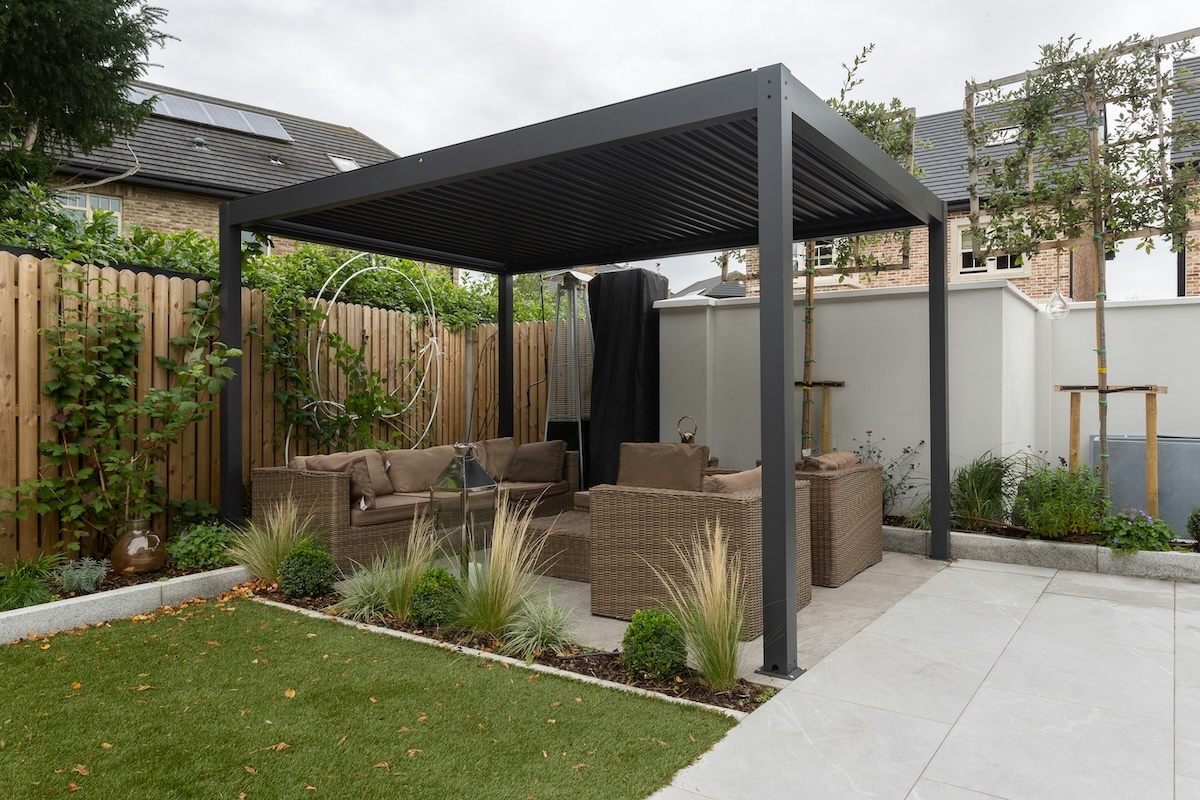
The right pergola turns a sun-blasted patio into a year-round outdoor room. In Colorado, that means designing for intense UV, afternoon thunderstorms, and everything from 90-degree summer days to spring snowstorms.
Most pergola guidance assumes moderate climates with predictable weather patterns. Colorado operates differently. Our high-altitude sun is significantly more intense than at sea level, we experience 40-degree temperature swings in a single day, and afternoon storms roll through with little warning during summer months.
A traditional open-slat wood pergola that works beautifully in the Pacific Northwest or Northeast often leaves Denver homeowners disappointed. The widely spaced rafters that filter coastal sun still leave you squinting and overheated under our Front Range sky. Meanwhile, that same structure needs to handle surprise hail, heavy wet snow, and the constant expansion and contraction that comes with our dramatic temperature fluctuations.
Designing a pergola that actually works here requires understanding what Colorado weather demands from outdoor structures.
Before choosing a pergola style, consider what our climate does to common building materials.
UV Exposure at Altitude
Denver sits at 5,280 feet, and many Front Range communities are higher still. UV radiation increases with elevation, and at mile-high altitude, sun exposure is noticeably more intense than in coastal or low-elevation cities. This accelerates fading, material degradation, and surface cracking on everything from wood stains to vinyl components. Any pergola material you choose will face more sun stress here than the manufacturer's standard warranty conditions likely assume.
Freeze-Thaw Cycles
Colorado's temperature swings are brutal on materials that absorb moisture. Water enters small cracks during warmer periods, then expands when temperatures drop below freezing. Over a typical winter, this cycle repeats dozens of times, gradually splitting wood, cracking vinyl, and weakening joints. Materials that perform well in consistently cold or consistently warm climates often fail here.
Hail and Wind
Summer thunderstorms bring hail ranging from pea-sized to golf ball-sized, and wind gusts that can exceed 60 mph along the Front Range. Pergola roofing materials and structural connections need to withstand impact and uplift forces that would be unusual in many other regions.
Snow Load
A late spring or early fall snow can dump heavy, wet accumulation on structures not designed to handle it. Unlike the lighter powder common in midwinter, these shoulder-season storms create significant weight that can stress improperly engineered pergolas.
Wood remains popular for its natural appearance and ability to complement Colorado's mountain and rustic architectural styles. However, wood performance varies dramatically by species.
Cedar offers natural resistance to rot and insects, making it one of the most weather-resistant wood options for pergolas. Its natural oils help it handle moisture better than other species. Expect to restain or reseal every two to three years to maintain appearance and UV protection. With proper maintenance, a cedar pergola can last 15 years or more in Colorado.
Redwood provides similar rot resistance and a distinctive color, though it's less commonly available along the Front Range and typically costs more than cedar.
Pressure-treated pine costs less upfront but demands more maintenance. It's more susceptible to cracking, warping, and checking under Colorado's UV intensity and temperature swings. If budget is a primary concern, pressure-treated wood can work, but expect shorter lifespan and more frequent upkeep.
The maintenance reality: Any wood pergola in Colorado requires consistent attention. The intense sun degrades protective finishes faster than in lower-altitude climates, and our dry air can cause wood to crack and check if finishes aren't maintained. If you're realistic about committing to annual inspections and refinishing every few years, wood can be a beautiful choice. If low maintenance matters more, consider other materials.
Aluminum has become increasingly popular for Colorado pergolas, particularly for louvered and motorized designs. The material doesn't rot, warp, or attract insects, and it resists corrosion far better than steel. High-quality powder-coated aluminum resists UV fading and can handle our temperature extremes without the expansion and contraction issues that affect wood.
Well-built aluminum pergolas can last decades with minimal maintenance beyond occasional cleaning. The material is also lightweight yet strong, allowing for larger spans and more design flexibility than wood.
The main trade-off is aesthetic: aluminum doesn't provide the natural warmth of wood. However, modern powder-coating techniques can create convincing wood-grain finishes for those who want durability without sacrificing appearance.
Vinyl offers low maintenance and won't rot or require refinishing. However, vinyl has limitations in Colorado's climate. It can become brittle in extreme cold and may crack under heavy snow loads. Intense UV exposure can cause yellowing and degradation over time. If you're considering vinyl, look for products with strong UV inhibitors and verify the warranty covers high-altitude conditions.
Steel provides excellent strength and a distinctive industrial or modern aesthetic. However, steel requires protective finishes to prevent rust, and these finishes need periodic maintenance. Steel also conducts heat and cold more than other materials, which can affect comfort in extreme temperatures.
The roof design matters as much as the material, especially in Colorado where weather conditions vary dramatically throughout a single day.
Traditional pergolas with evenly spaced rafters and no additional covering provide filtered shade, not full protection. In Colorado, this filtering often isn't enough during midday summer hours. Open-slat designs work best when combined with shade cloth, retractable canopies, or climbing plants that fill in the gaps.
Best for: Those who want partial shade and airflow, plan to add plant coverage, or primarily use their outdoor space during morning and evening hours.
A solid roof provides complete protection from sun and rain. In Colorado, this allows outdoor space use during afternoon thunderstorms and provides relief from intense midday sun. Solid roofs also handle snow loads better than open designs.
The trade-off is reduced flexibility. On pleasant Colorado mornings when you want full sun, a solid roof blocks it entirely. Solid roofs also require proper drainage design to handle heavy rain and snowmelt.
Best for: Outdoor kitchens, dining areas, and spaces adjacent to the house where weather protection is the priority.
Louvered systems use adjustable slats that rotate to provide full sun, partial shade, or complete coverage depending on conditions. This flexibility makes them particularly well-suited to Colorado's variable weather. Open the louvers on a crisp fall morning to enjoy full sun, then close them when an afternoon storm rolls through.
Many louvered systems are motorized and can be controlled by remote, smartphone, or weather sensors that automatically close when rain is detected. Some Denver-area homeowners have reported that louvered pergolas transformed previously unusable west-facing patios into functional outdoor rooms by allowing precise control over intense afternoon sun.
Louvered pergolas are typically aluminum construction and represent a higher investment than traditional wood designs, but the flexibility and durability often justify the cost in Colorado's demanding climate.
Best for: Those who want maximum flexibility, west or south-facing exposures, and the ability to use outdoor space regardless of weather conditions.
Fabric canopies mounted on pergola frames offer an alternative approach to adjustable shade. The canopy retracts when you want full sun and extends for protection from UV or light rain. However, fabric systems typically can't handle heavy rain, hail, or snow, and the fabric itself degrades faster under Colorado's intense UV exposure than in lower-altitude locations.
Best for: Covered patios where the pergola provides the primary structure and the canopy offers supplemental, fair-weather shade.
How your pergola relates to your home and the path of the sun dramatically affects its usefulness.
West-facing patios receive the most intense afternoon sun and heat. If you're adding a pergola to a west exposure, prioritize shade coverage over openness. Louvered systems or solid roofs typically work better here than traditional open-slat designs.
South-facing spaces get sun throughout the day. An adjustable system allows you to moderate sun exposure as it shifts from morning through afternoon.
North-facing areas receive primarily indirect light and may not need heavy shade coverage. A traditional open-slat pergola often works well here, providing definition and structure without blocking limited direct sun.
Consider wind patterns as well. Along the Front Range, winds frequently come from the west, though patterns vary by season and specific location. Position your pergola to use the house or other structures as a windbreak when possible, or incorporate screens or partial walls to buffer wind while maintaining views.
Pergolas need adequate size to be functional. A structure that looks proportional to your house may be too small to comfortably accommodate furniture and circulation. As a general guideline, allow at least 10 feet by 12 feet for a dining area, and more if you're including lounging space or an outdoor kitchen.
Also consider ceiling height. Standard pergola heights of 8 to 9 feet work for most residential applications, but taller ceilings (10 to 12 feet) can make larger pergolas feel more open and less enclosed.
Pergolas work best as part of a larger landscape design rather than standalone additions. Consider how the pergola relates to:
Outdoor kitchens: A pergola provides essential shade over cooking and dining areas. Solid or louvered roofs protect from sun and rain while you're grilling.
Fire features: Positioning a pergola adjacent to (not directly over) a fire pit creates a natural flow between covered and open areas. The pergola offers a retreat when nights get cool, while the fire pit area remains open to the sky.
Plantings: Landscape around pergola footings to integrate the structure with your yard. Climbing plants on traditional pergolas add shade and visual interest.
If you choose a traditional wood pergola with open slats, climbing plants can fill in gaps and provide living shade. Not all popular pergola vines work in Colorado's climate. Here are options proven to handle our conditions:
Clematis thrives in Colorado and offers hundreds of varieties with flowers in nearly every color. Clematis needs cool roots and sunny tops, so mulch the base well. Most varieties are hardy to Zone 5 and handle our winters without issue. Different varieties bloom at different times, so you can select for spring, summer, or fall flowers.
Honeysuckle grows well along the Front Range, attracts hummingbirds, and produces fragrant blooms from late spring through summer. Look for non-invasive varieties like Blanche Sandman, with pink-orange flowers and golden throats, or native trumpet honeysuckle (Lonicera sempervirens). Avoid Japanese honeysuckle, which can spread aggressively.
Wisteria can be grown successfully in Colorado with the right variety and placement. Look for cold-hardy types like Aunt Dee Kentucky or Texas Purple (Japanese). Plant in a protected location where late frosts won't damage early flower buds. Be aware that wisteria is vigorous and heavy when mature; your pergola structure needs to support substantial weight.
Grape vines provide dense shade, fall color, and (depending on variety) edible fruit. Concord, Fredonia, and Niagara are hardy options for Colorado. Grapes require sturdy support and annual pruning but create classic pergola coverage.
Virginia creeper offers rapid growth and brilliant fall foliage without requiring much care. It provides thick, leafy coverage but no flowers. This native vine handles Colorado's climate well and climbs using small adhesive discs rather than twining, so it attaches to smooth surfaces easily. Note that Virginia creeper grows vigorously and needs regular trimming to keep it in bounds.
A well-designed pergola requires coordination between structural engineering, necessary permitting, material selection, and landscape integration. Working with a licensed landscape architect ensures your pergola meets local building codes (permits are typically required for attached structures and those over a certain size), handles Colorado-specific weather loads, and integrates with your overall outdoor living vision.
Professional design also helps avoid common mistakes: pergolas that are too small to be functional, poorly oriented structures that don't address actual sun patterns, and material choices that underperform in our climate.
Please note, it’s important to check local regulations for feasibility, permit, and setback requirements.
Ivy Street Design creates custom pergola and shade structure designs tailored to Colorado's unique climate. Our licensed landscape architects work with you from concept through construction to ensure your outdoor living space handles everything Colorado weather delivers. Contact us to discuss your project. Call today. (303) 320-0362