

Thanks! We have received your form submission, we'll get back to you shortly!
Oops! Something went wrong while submitting the form
If you own a mid-century home, you probably wonder what the right landscape design should look like. It's a question that comes up constantly, and the answer isn't as simple as copying what you see in Palm Springs photo spreads. The best mid-century landscape responds to your specific house, your specific climate, and your specific way of living outdoors.
Denver's neighborhoods contain thousands of ranch homes built between the late 1940s and early 1970s. Harvey Park alone holds 160 Cliff May-designed homes, those iconic low-slung ranches that helped define the era. Throughout Arapahoe Acres, Krisana Park, and countless other neighborhoods, mid-century homes wait for landscapes that honor their architectural character while working for modern Colorado life.
The secret to great mid-century landscaping isn't complicated: let the house tell you what to do. Look at the details, the materials, the angles. Then design a landscape that extends those elements outward, creating a seamless connection between architecture and outdoor space.
Mid-century modern landscape design emerged alongside the architecture it surrounds. Both share fundamental principles: clean lines, integration of indoor and outdoor spaces, honest use of materials, and restraint that lets each element breathe.
Where Victorian gardens featured ornate complexity and formal layouts, mid-century landscapes embrace simplicity. Where traditional foundation plantings hide the base of a house, mid-century designs celebrate the connection between structure and ground. Where cottage gardens overflow with exuberant variety, mid-century plantings use repetition and geometry to create calm.
The style prioritizes function alongside beauty. Patios become outdoor living rooms. Screens create privacy without solid barriers. Plants serve architectural purposes, not just decorative ones. Everything has a reason for being where it is.
This doesn't mean mid-century landscapes are cold or sterile. At their best, they achieve a warm minimalism, spaces that feel both designed and natural, controlled but alive with movement and seasonal change.
The best starting point for any mid-century landscape is the house itself. Even a modest ranch has unique details that suggest design direction.
Look for materials to pick up and extend into the landscape. If your house features limestone accent walls or a stone chimney, consider incorporating that same stone into seat walls, stepping stones, or planters. If you have brick, it might reappear in a patio or garden edge. The goal isn't matching everything exactly, but creating visual conversation between house and landscape.
Look for shapes to repeat. Does your house have an angled porch beam? Consider angled planting beds that echo that geometry. Is there a slight crease in the floor plan where the house bends ten degrees? Let the bed lines play off that angle. Circular windows or round details might suggest curved elements in the landscape.
Look for lines of force to extend. The centerlines of windows and doors, the corners of the building, the edges of major architectural features: these all provide natural guidelines for organizing the landscape. A bed line aligned with a window edge feels intentional in ways that random placement cannot achieve.
The closer to the house, the more the landscape should respond directly to the architecture. As you move farther out, let the design become looser, more naturalistic. This graduated formality creates flow and prevents the landscape from feeling rigidly geometric throughout.
Think hardest about hardscape. Patios, decks, pergolas, and outdoor walls represent structure. These choices need to last. Mistakes cost money, and hardscaping represents the biggest dollar investment in most landscape projects.
Plants are like the wallpaper for the landscape. They're opportunities for color and texture, but they can be changed out. A yellow perennial you don't like after a couple years? Replace it or move it to the compost pile. But a patio that's too small for your furniture? That's an expensive problem to fix.
Concrete remains a staple material in mid-century landscapes, offering versatility, durability, and that honest material quality the style celebrates. Large-format pavers with clean edges suit the aesthetic better than busy patterns. Exposed aggregate adds texture without fussiness. Colored concrete can pick up tones from the house.
The size of outdoor spaces deserves particular attention. Too many patios end up as rectangles that look adequate until you place furniture on them and realize there's no room for circulation. A fire pit area needs at least 15 feet in diameter to accommodate seating plus the fire bowl plus space for someone to walk behind the chairs. Measure your outdoor furniture and plan for real-world use.
Seat walls, retaining walls, and privacy screens add vertical dimension that mid-century landscapes often need. These elements can define outdoor rooms, provide seating, and create the sense of enclosure that makes outdoor spaces feel like genuine living areas rather than leftover yard.
Mid-century landscapes favor plants with architectural presence, clean forms, and year-round interest. The goal isn't a riot of color competing for attention, but a coordinated planting that serves as an extension of the house.
Ornamental grasses deliver mid-century character better than almost any other plant category. Their upright forms provide structure. Their movement adds the animation that brings landscapes alive. Their seasonal changes, from green summer foliage through golden winter stalks, offer year-round interest. And for Colorado's climate, many grasses require minimal water once established.
Karl Foerster feather reed grass has become ubiquitous in commercial landscapes for good reason: it's reliable, upright, and looks great year-round. For residential mid-century designs, consider also prairie dropseed for its fine texture and subtle fragrance, little bluestem for its blue summer foliage and copper fall color, or blue grama, Colorado's state grass, for lower-water applications.
Succulents and cacti align naturally with mid-century aesthetics. Their structural forms and clean lines complement modernist architecture perfectly. While we can't grow the agaves and yuccas that define Palm Springs landscapes, Colorado-hardy options like hens and chicks, sedum varieties, and prickly pear cactus deliver similar visual effects.
Ground covers that create clean, uniform surfaces suit the style better than mixed cottage plantings. They well in Colorado conditions while providing that low, controlled appearance mid-century designs favor.
Shrubs with strong forms outperform those with loose, sprawling habits in mid-century applications. The right choices will provide the geometric presence these landscapes need. But choose varieties suited to Colorado's climate, not the marginally hardy options that struggle through our dry winters.
Here's where many mid-century landscape attempts go wrong: trying to recreate Palm Springs in a climate that doesn't support it.
The simplistic plantings you see in desert landscapes, plants spaced six to eight feet apart with gravel mulch and barely any lawn, developed because of the desert climate. That aesthetic emerged from genuine environmental conditions, not arbitrary style choices. Transplanting it directly to Colorado creates landscapes that look wrong because they are wrong for this place.
We can't grow most of the iconic Palm Springs plants here. We don't have their mild winters or their infrequent hard freezes. We do have altitude, intense sun, dramatic temperature swings, and snow. Our landscapes need to respond to these realities.
The solution isn't abandoning mid-century principles but applying them to Colorado conditions. The right plant choices connect your landscape to the regional ecology while delivering the clean, architectural qualities mid-century design demands.
A mid-century landscape should look like it belongs where it is. In Denver, that means acknowledging our short grass prairie heritage, our mountain backdrop, our high-altitude light. The resulting designs feel both authentically mid-century and authentically Colorado, which is exactly what they should achieve.
If your mid-century home still has its original landscape, or something close to it, you know the typical formula: a straight line of yews or junipers against the foundation, perhaps a blue spruce or crabapple in the front yard, maybe that burgundy Crimson King maple the builders loved. The combination appears so consistently because those were simply the plants available when these houses were built.
The perennials we take for granted today didn't exist in nurseries then. Ornamental grasses didn't arrive in American gardens until the late 1980s. Where builders once had perhaps a dozen shrub options, we now have hundreds. This expanded palette creates an opportunity to honor mid-century principles while achieving far more interesting results than the original plantings could provide.
Don't feel obligated to preserve overgrown foundation plantings out of some sense of historical authenticity. Mid-century landscape design isn't about using 1960s plants. It's about applying mid-century principles, which we can do far more effectively today with contemporary plant varieties specifically selected for architectural form, climate adaptation, and year-round interest.
Those yews that have grown past the window sills? They weren't meant to live there forever. The spruce planted three feet from the driveway that now forces you to limb it up like a pipe cleaner? That was a mistake from the beginning. Replace them with plants that serve your landscape better, chosen and placed with intention.
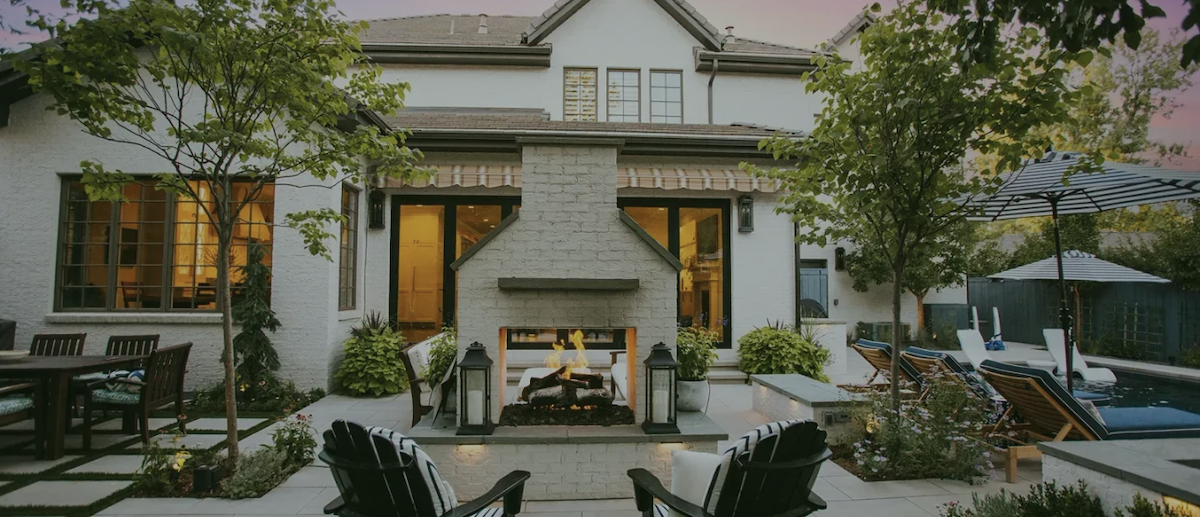
Mid-century architecture blurs boundaries between inside and outside. Large windows, sliding glass doors, and covered patios were revolutionary features that invited outdoor living into daily life. Your landscape should continue that philosophy by creating genuine outdoor rooms.
Think about how you actually want to use outdoor space. Dining requires different dimensions than lounging. A fire pit gathering area needs different organization than a reading nook. Each use suggests specific sizes, furnishings, and relationships to the house.
Define these spaces with changes in material, shifts in level, or vertical elements like screens and plantings. The boundaries don't need to be solid walls. A row of ornamental grasses can separate the dining patio from the fire pit area while maintaining visual connection. A low seat wall defines an edge without blocking sight lines.
Consider traffic patterns. How do you move from the kitchen to the grill? From the living room to the fire pit? From the garage to the back door? Paths should accommodate these movements without forcing awkward routes through seating areas.
Furnishing outdoor rooms with the same intention you'd bring to interior spaces completes the mid-century philosophy. A comfortable outdoor sofa, properly scaled tables, lighting that extends usability into evening: these elements transform a patio from leftover space into a room you'll actually use.
Colorado's conditions require specific considerations that mid-century designs from milder climates don't address.
Winter interest matters more here than in regions with year-round growing seasons. When snow covers the ground and deciduous plants are dormant, the landscape's bone structure becomes visible. Evergreen plants, interesting bark, and sculptural forms provide winter appeal. Leave ornamental grasses standing through winter for their golden color and the way they hold snow.
Water consciousness aligns naturally with mid-century restraint. The style's preference for clean, uncluttered planting and its celebration of negative space translates well to xeric design. Gravel mulches instead of turf, drought-tolerant natives instead of water-hungry imports, efficient irrigation instead of blanket sprinkler coverage: these choices honor both mid-century principles and Colorado's water realities.
Intense sun exposure at altitude ages materials faster than at lower elevations. Choose finishes that can handle UV bombardment. Concrete holds up better than many stains. Stone outlasts painted surfaces. Plants that tolerate full sun elsewhere may need afternoon shade protection here.
And plan for the weather extremes that make Colorado challenging. A pergola needs to handle snow loads. Pavers need proper base preparation to survive freeze-thaw cycles. Plant selections need to tolerate both summer drought and winter desiccation.
The best mid-century landscape isn't a museum piece frozen in 1962. It's a living space that honors the architectural principles of your house while serving your actual life today.
Start by observing how you want to live outdoors. Do you entertain frequently or prefer solitary retreat? Do you need space for children's activities or adult relaxation? Do you spend mornings on the patio with coffee or evenings around a fire pit? The answers should shape your design priorities.
Notice what your house is telling you. Walk around and look at details you might have stopped seeing. That stone accent deserves a response in the landscape. That window wall orientation suggests where to place seating. The roof overhang defines where plants will struggle without rain.
And remember that landscaping, unlike architecture, changes with time and seasons. The mistakes are more forgivable. The opportunities for adjustment continue throughout your ownership. Start with the hardscape foundation, get that right, and let the planting evolve as you learn what thrives and what brings you joy.
At Ivy Street Design, we've been creating landscapes for Denver's mid-century homes for over 30 years. Our design process honors the architectural integrity of your house while creating outdoor spaces suited to modern Colorado living.
Whether you're starting from scratch or updating decades of accumulated plantings, we can help you achieve a landscape that looks like it belongs with your mid-century home. Contact us to start planning your mid-century landscape project.