Few plants earn their keep like sedum. Also called stonecrop, this tough succulent thrives in the hot, dry, rocky spots where most plants give up. On the Front Range, that makes it one of the smartest choices a homeowner can make. In this guide, you will learn what sedum is, why it works so well in Colorado, which varieties to plant, and how to design with it. Sedum is more than a filler.
Used well, it brings color, texture, and life to a yard from spring through winter.
Quick Summary
- Sedum, also known as stonecrop, is a hardy succulent prized for drought tolerance and low maintenance.
- It comes in two forms: low-growing groundcovers and taller upright clumps like Autumn Joy.
- Sedum thrives in Colorado's full sun, alkaline soils, and poor, rocky ground.
- It needs well-drained soil and very little water once established. Overwatering is the main way to kill it.
- Many varieties offer winter interest, with seed heads and foliage that shift to red, bronze, and copper.
- Sedum flowers attract bees and butterflies, and the plants resist deer and rabbits.
- Wait until spring to cut back sedum, which gives birds a winter food source.
What Is Sedum?
Sedum is a genus of succulent perennials in the stonecrop family. The name stonecrop comes from its habit of growing in the thinnest cracks of rock walls and outcrops, seemingly living on stone alone. Its thick, fleshy leaves store water, which is the source of its remarkable drought tolerance.
The genus is huge, with hundreds of species and countless cultivars. Leaf colors range from green and blue to silver, purple, and copper. The small, star-shaped flowers cluster together in white, yellow, pink, or red, usually blooming from summer into fall.
One note on names. Many upright sedums, including the popular Autumn Joy, have been reclassified into the genus Hylotelephium. Most gardeners still call them sedums, and their care is largely the same.
Why Sedum Works So Well in Colorado
The Front Range throws hard conditions at any plant. Intense high-altitude sun, alkaline soils, lean rocky ground, and long dry spells all favor a plant built to survive them. Sedum is exactly that plant.
Colorado State University Extension notes that sedums thrive in alkaline soil and full sun and need minimal maintenance. That matches our region almost perfectly. The plant asks for the very conditions many homeowners struggle to garden in.
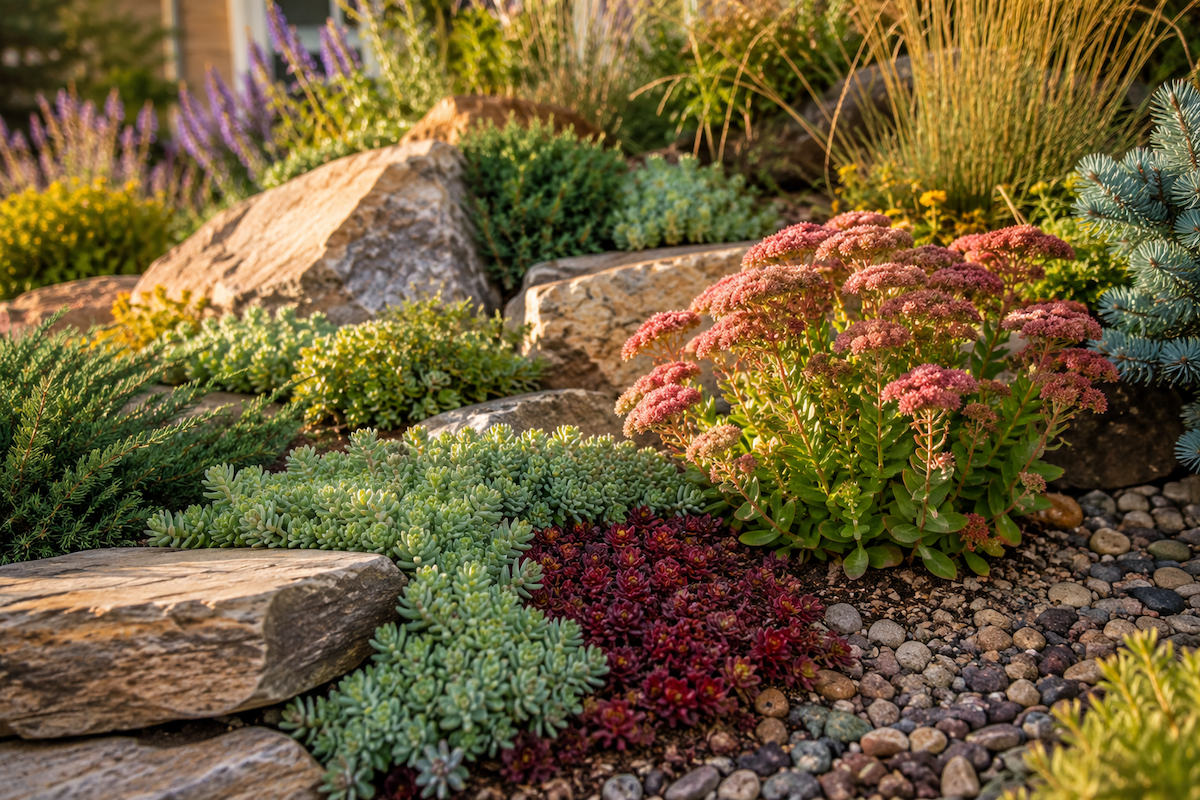
Sedum also earns a place in water-wise design. It appears in xeriscape demonstration gardens across the Front Range, from Broomfield to Colorado Springs. Paired with gravel mulch, boulders, and other drought-tolerant plants, it helps cut irrigation while keeping a yard colorful.
The Two Forms of Sedum
Understanding the two basic forms helps you place sedum well in a design.
Low-Growing Groundcover Sedum
These creeping types stay only a few inches tall and spread into dense mats. They work as groundcover, as filler between pavers and rocks, and as spillers that cascade over walls and container edges. On slopes they double as erosion control, rooting wherever stems touch soil.
Upright Clumping Sedum
These grow in taller clumps, often 18 to 24 inches high, topped with large flower clusters. They suit perennial and succulent beds where some height is wanted. Autumn Joy is the best-known example, with fleshy gray-green leaves and blooms that shift from pink to copper-red in fall.
How to Plant and Grow Sedum in Colorado
Sedum is one of the easiest plants to grow when you respect a few rules. Follow these steps.
- Choose a sunny spot. Sedum prefers full sun and blooms best with at least six hours of direct light.
- Provide well-drained soil. Sandy or gravelly ground is ideal, and our rocky soils suit it well.
- Plant in spring or summer once frost danger has passed.
- Water deeply right after planting to establish roots.
- Once established, water sparingly. Overwatering causes root rot and floppy growth.
- Skip the fertilizer. Too much nutrition makes upright varieties weak and leggy.
Designing With Sedum
Sedum is a flexible design tool, not just a problem-solver. A few approaches bring out its best.
- Rock gardens: Its drought tolerance and love of poor soil make it a natural fit among boulders and gravel.
- Borders and edging: Low-growers like Dragon's Blood shine at the front of beds and along paths.
- Slopes: Creeping varieties control erosion while adding color.
- Containers: Upright types anchor a pot while trailing types spill over the edge.
- Pollinator plantings: Upright varieties draw bees and butterflies late in the season.
Pair sedum with companions that share its conditions. Ornamental grasses, coneflower, yarrow, and lavender all combine well and reinforce a water-wise theme.
Sedum and the Four Seasons
One of sedum's best qualities is year-round interest. In spring and summer, foliage forms lush mats or upright clusters in green, gold, burgundy, and variegated tones. As fall arrives, many creeping types turn vivid red, bronze, or copper, while upright blooms deepen in color.
Winter is where sedum surprises people. The dried seed heads of upright varieties stand as sculptural forms, and a dusting of frost or snow adds to the effect. For that reason, wait until spring to cut sedum back. Leaving the heads up also gives local birds a winter food source.
Conclusion
Sedum rewards Colorado gardeners more than almost any other plant. It thrives in the sun, soil, and dry conditions that define the Front Range, asks for little water, and delivers color across all four seasons. Whether you need a groundcover for a slope, an anchor for a rock garden, or a pollinator magnet for a border, there is a sedum suited to the job.
If you are planning a water-wise landscape, sedum is a strong place to start. Walk your yard and find the hot, dry, sunny spots where grass struggles. Those are the perfect homes for stonecrop. Our team designs and installs xeriscape and rock gardens across Boulder County and knows which varieties hold up in our climate.
Ready to add sedum to your landscape? Call Green Landscape Solutions at (720) 468-0987 or visit greenla